AMBITRORCH
Journey Part 2: The Formal Design
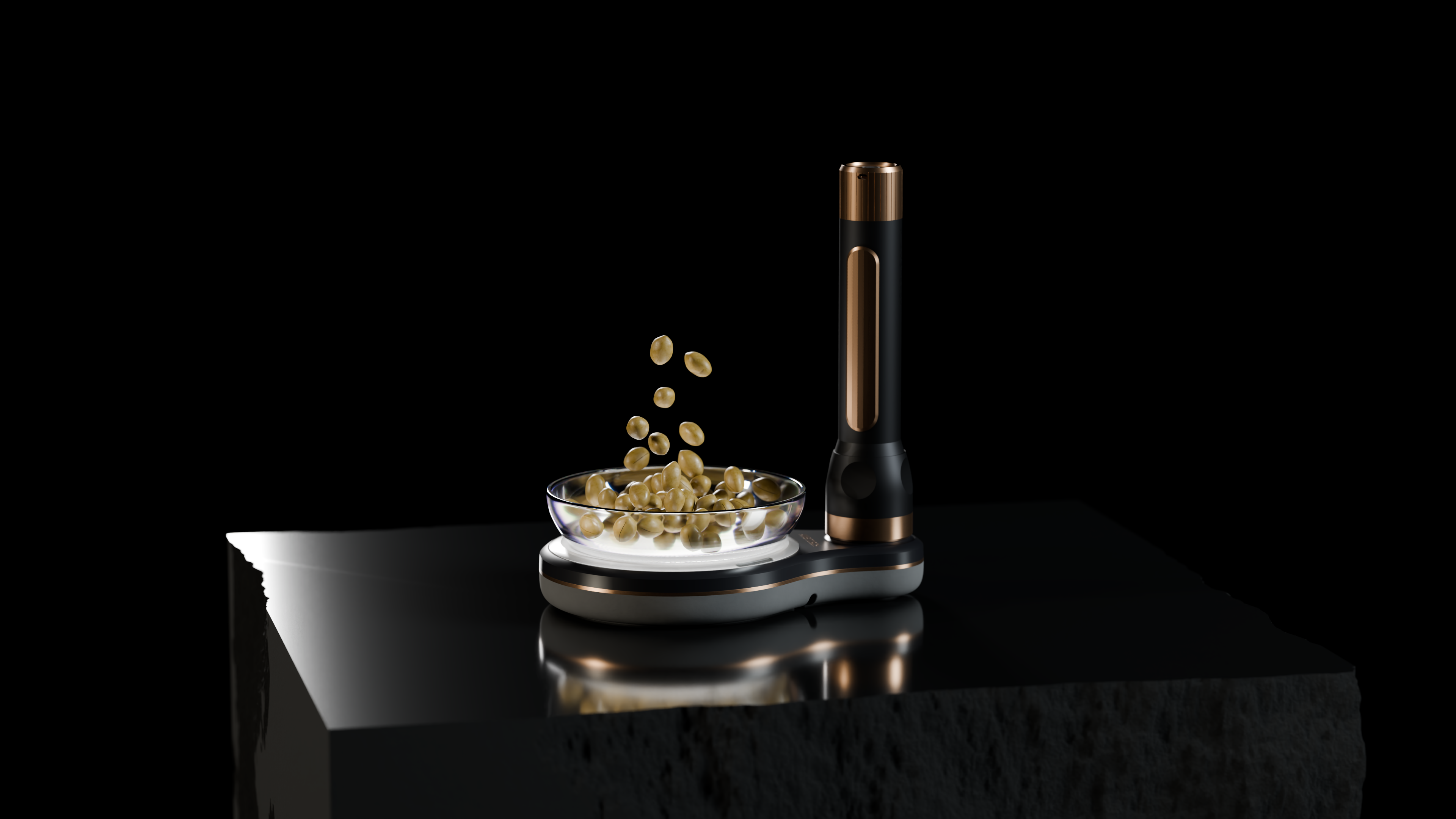
Following the ideation phase, the focus now shifts from concept to form. The goal: to translate a strong idea into a tangible design. The selected direction - Concept 2 - combines a vertical flashlight with a docking station that integrates a light conductor, allowing it to double as an ambient light source for small gatherings.
This phase presented new challenges, particularly in designing the light conductor, since no direct product references existed. Achieving effective light diffusion without major loss required experimentation and smart detailing.
With a clear vision in place, the formal design work began: defining proportions, surfaces, and functional elements to support both lighting modes. The intention was not only to ensure usability and technical feasibility, but also to create a visually minimal, yet emotionally engaging product.
This marks the transition from abstract thinking to physical design - a key step in shaping AMBITORCH into a real, user-centered product.
Appearance and Atmosphere
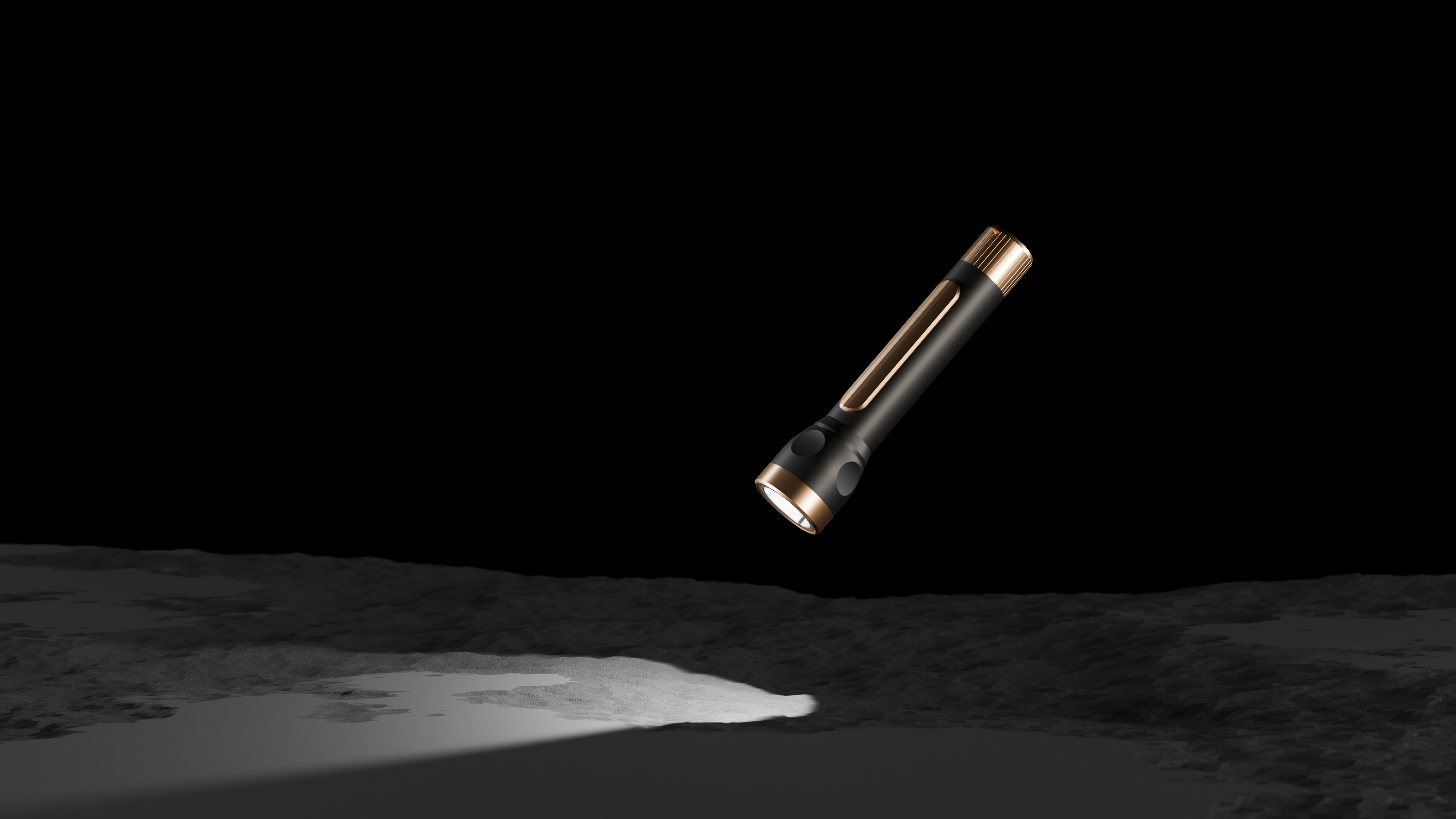
AMBITORCH is designed to feel right at home in well-curated living spaces. It’s not your typical rugged outdoor flashlight. While it can handle the occasional trip outside, its real strength lies in creating atmosphere indoors or on patios and balconies.
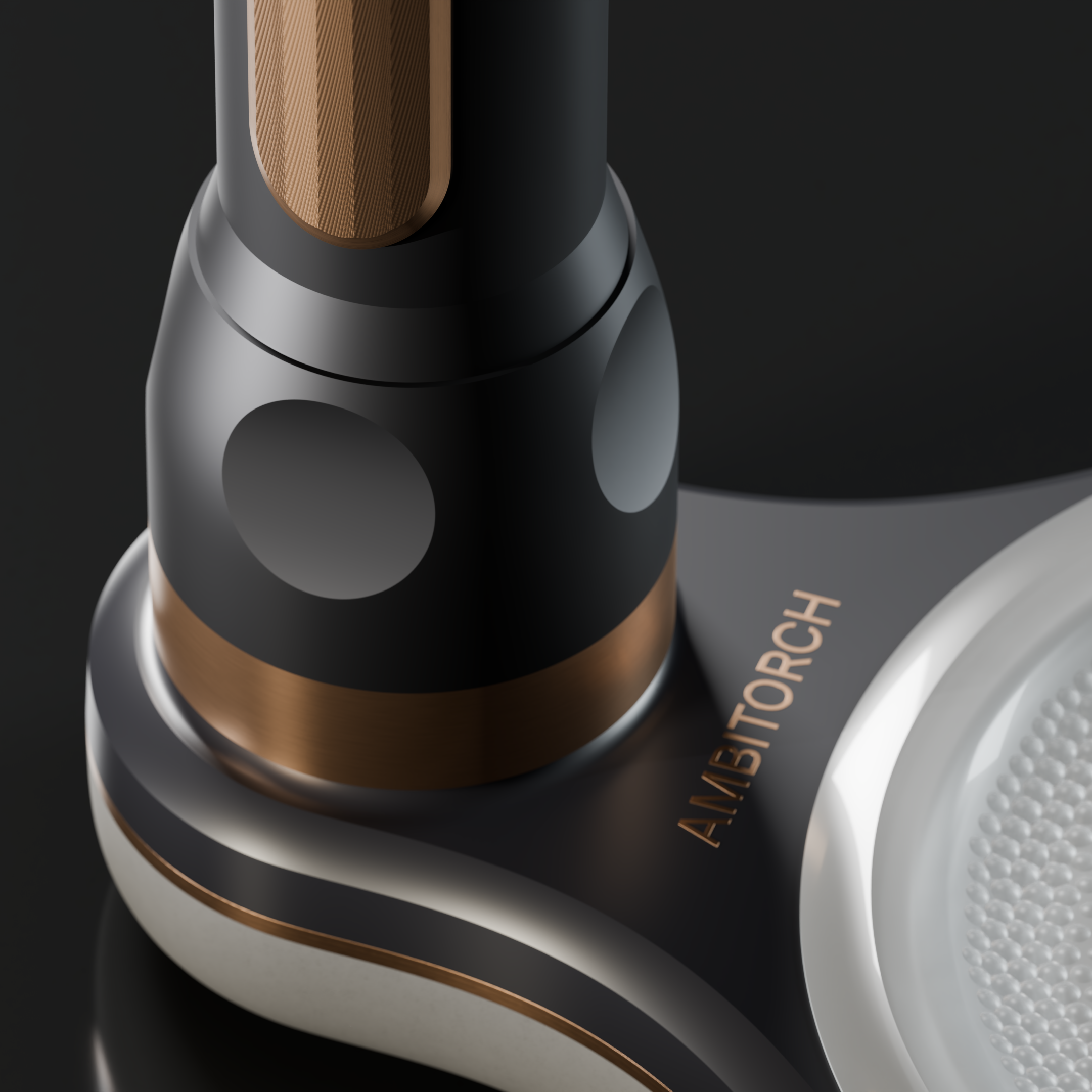
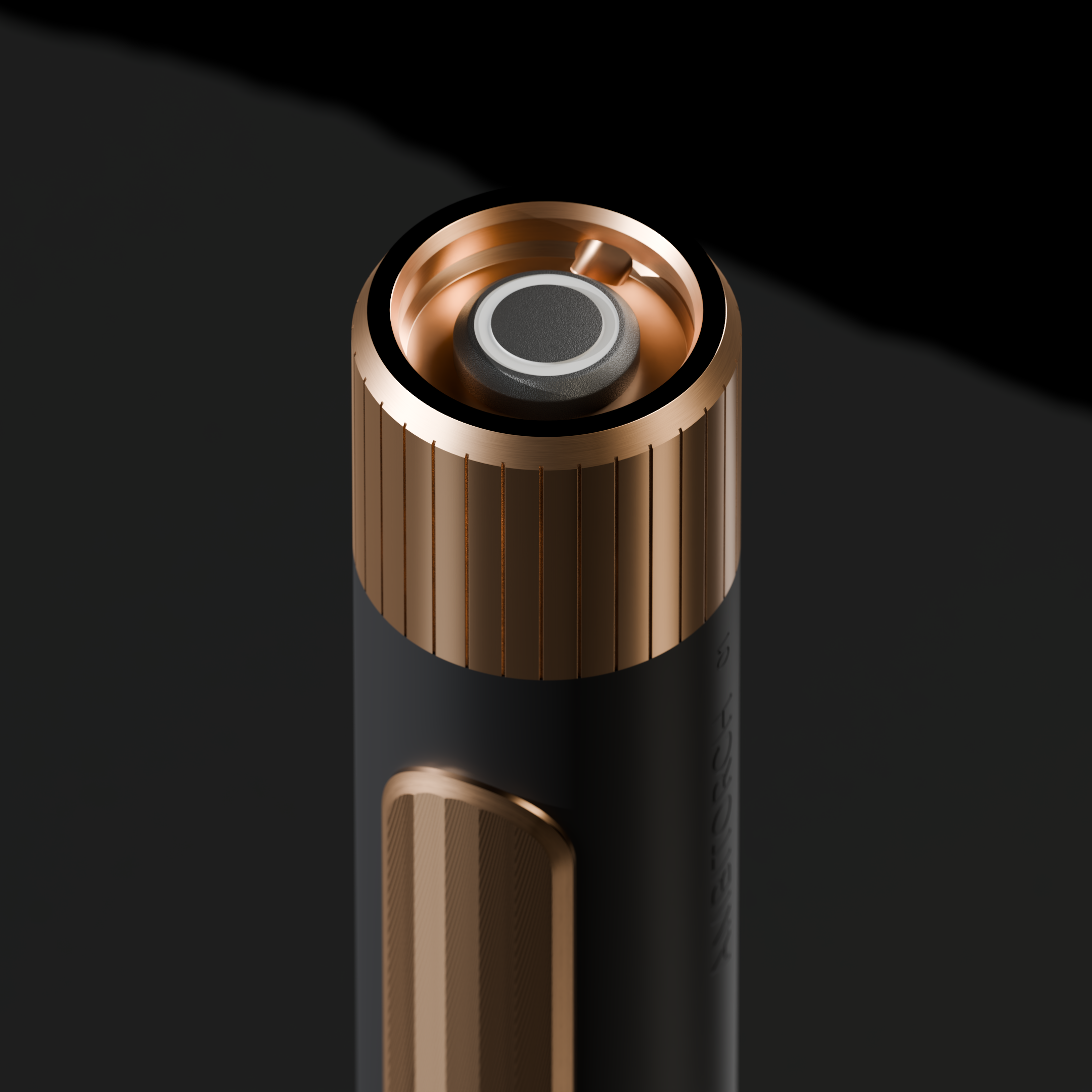
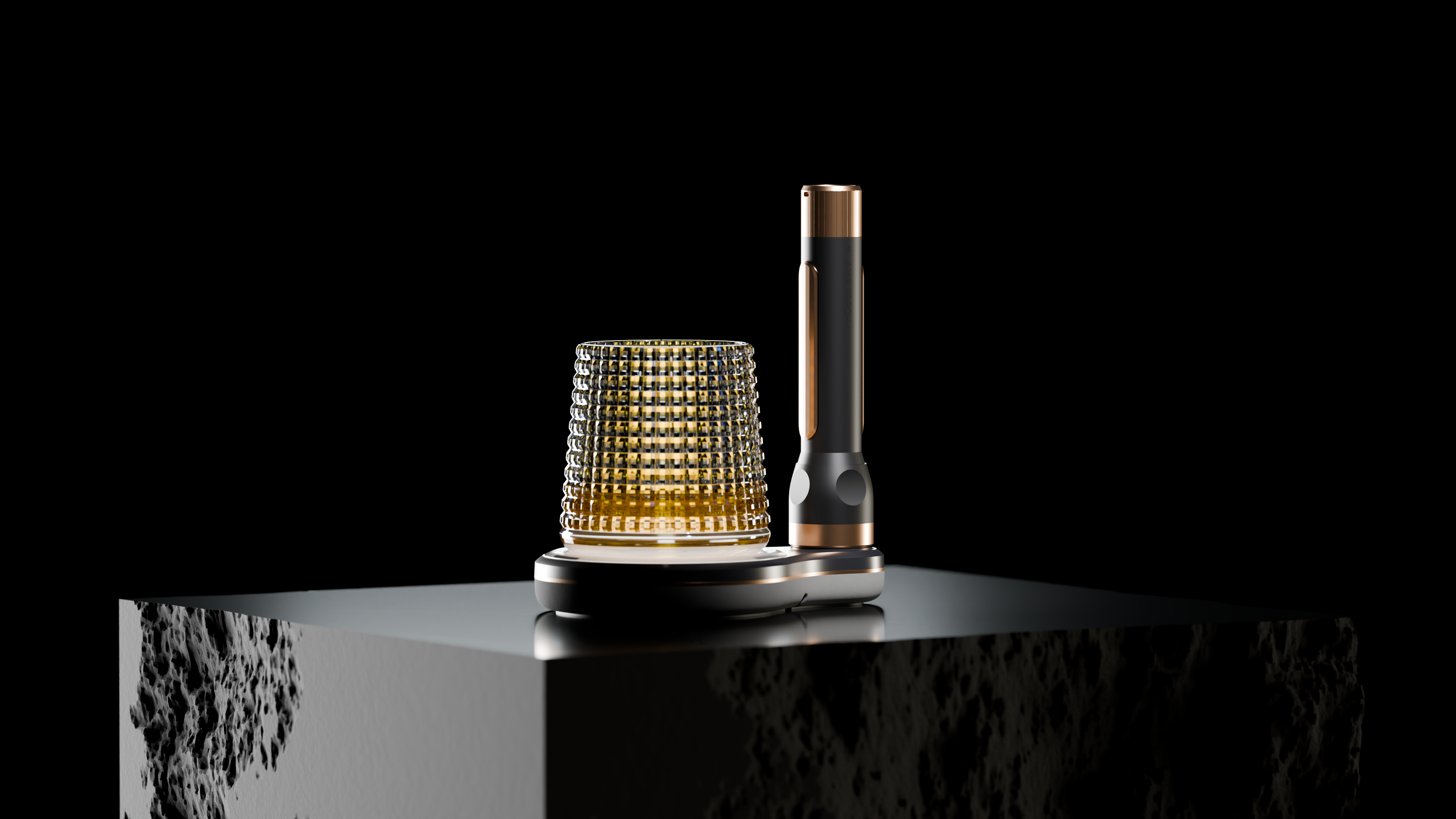
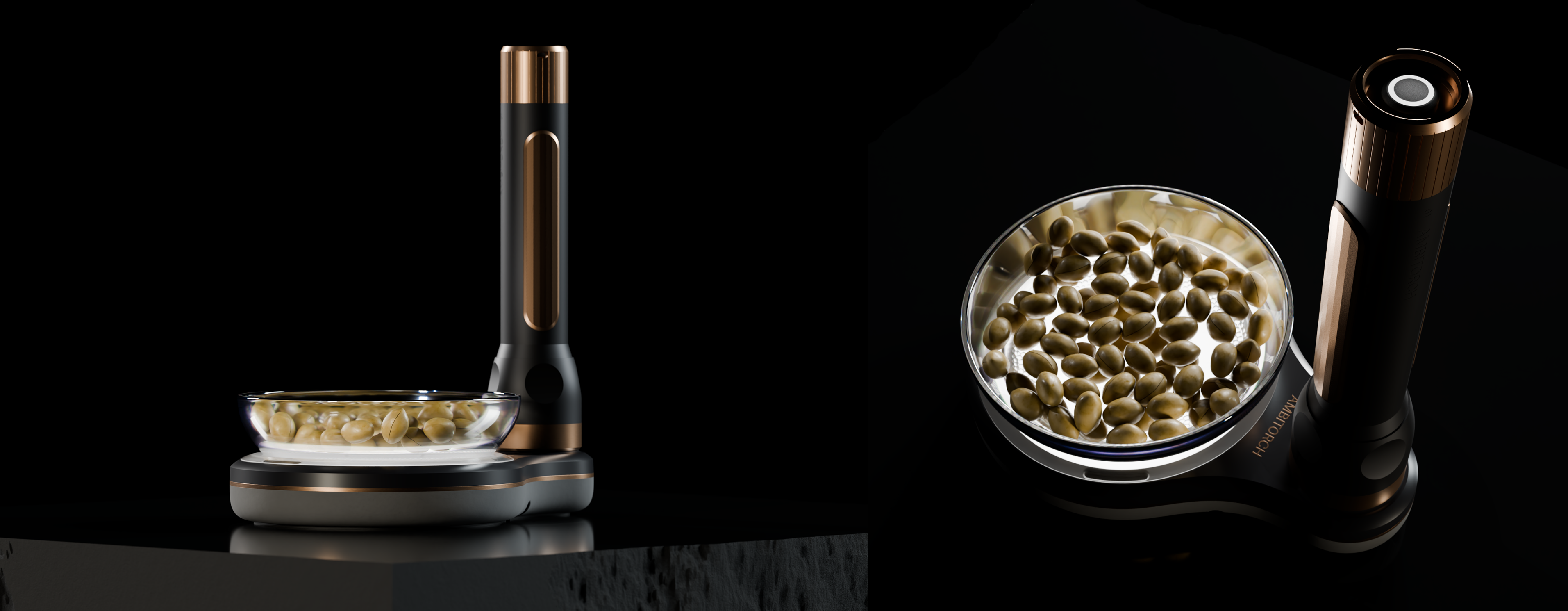
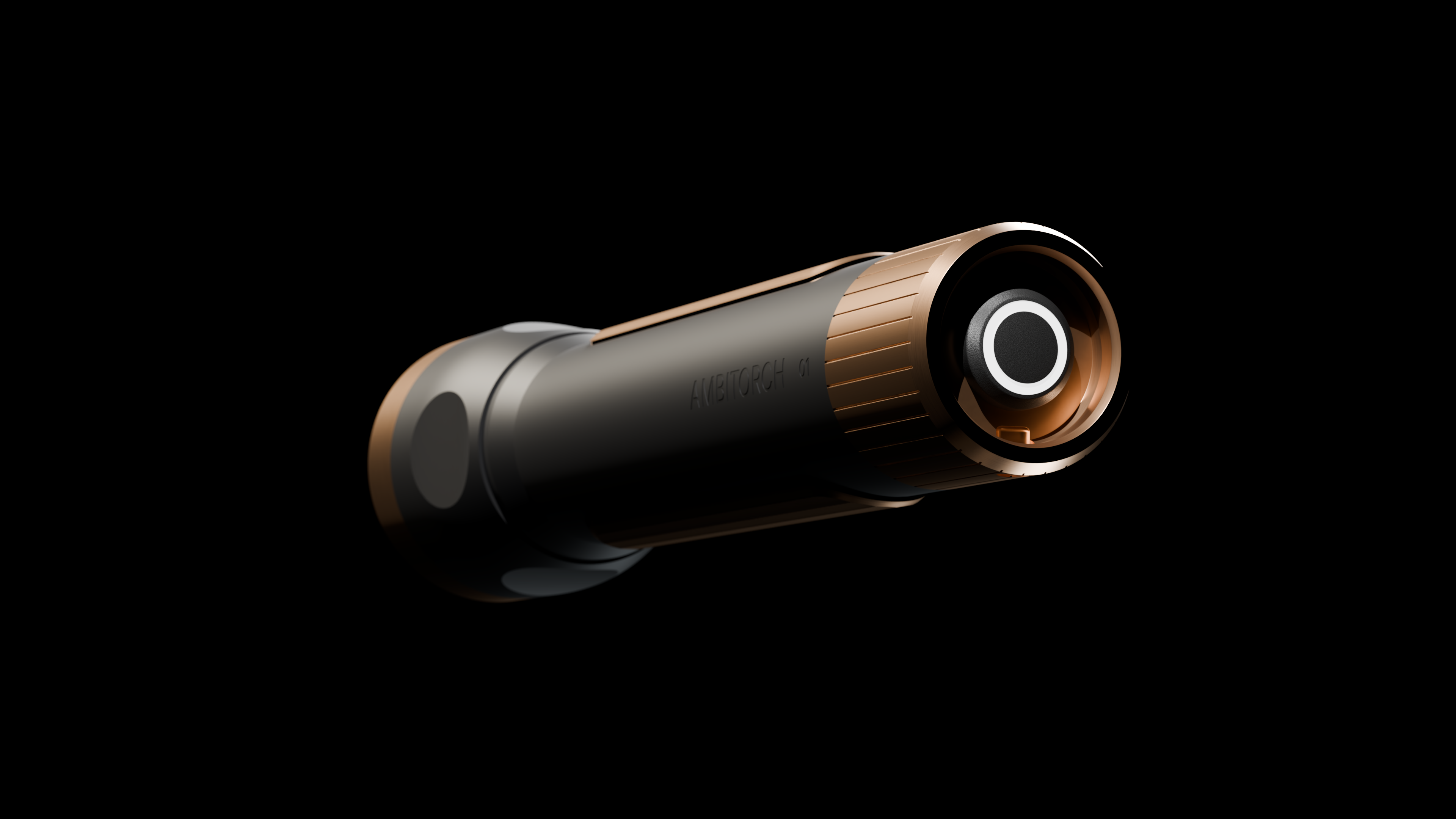
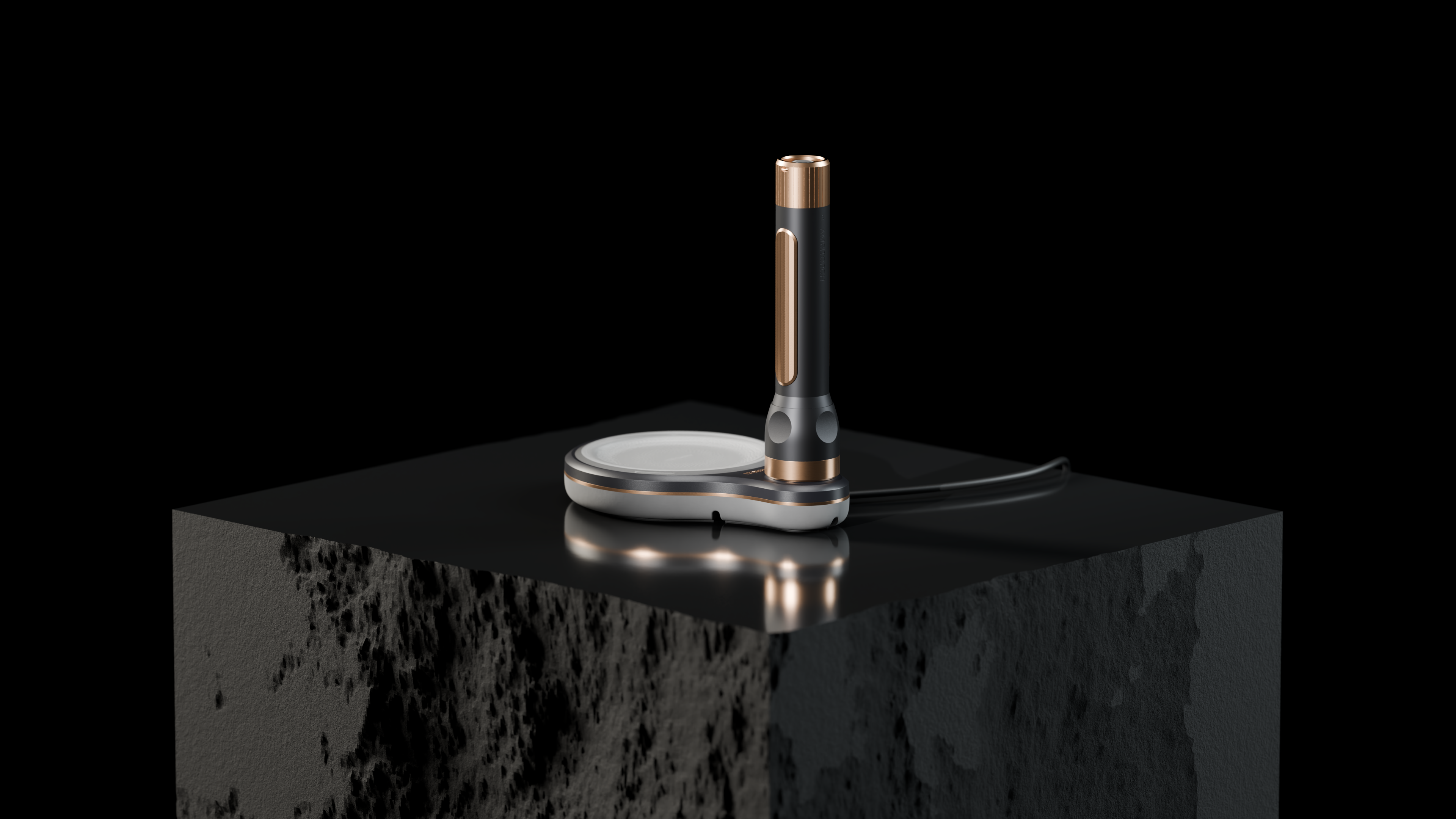
The flashlight itself has a clean, minimal shape. The anodized aluminum body comes in a deep, almost black tone with a subtle blue-violet hue. Two decorative inlays with faceted surfaces and a fine “Côtes de Genève” texture bring a bit of watchmaking elegance into the mix. The end cap, also made of aluminum, contrasts with a warm, golden anodized finish. Its brushed texture and polished face add an extra layer of detail.
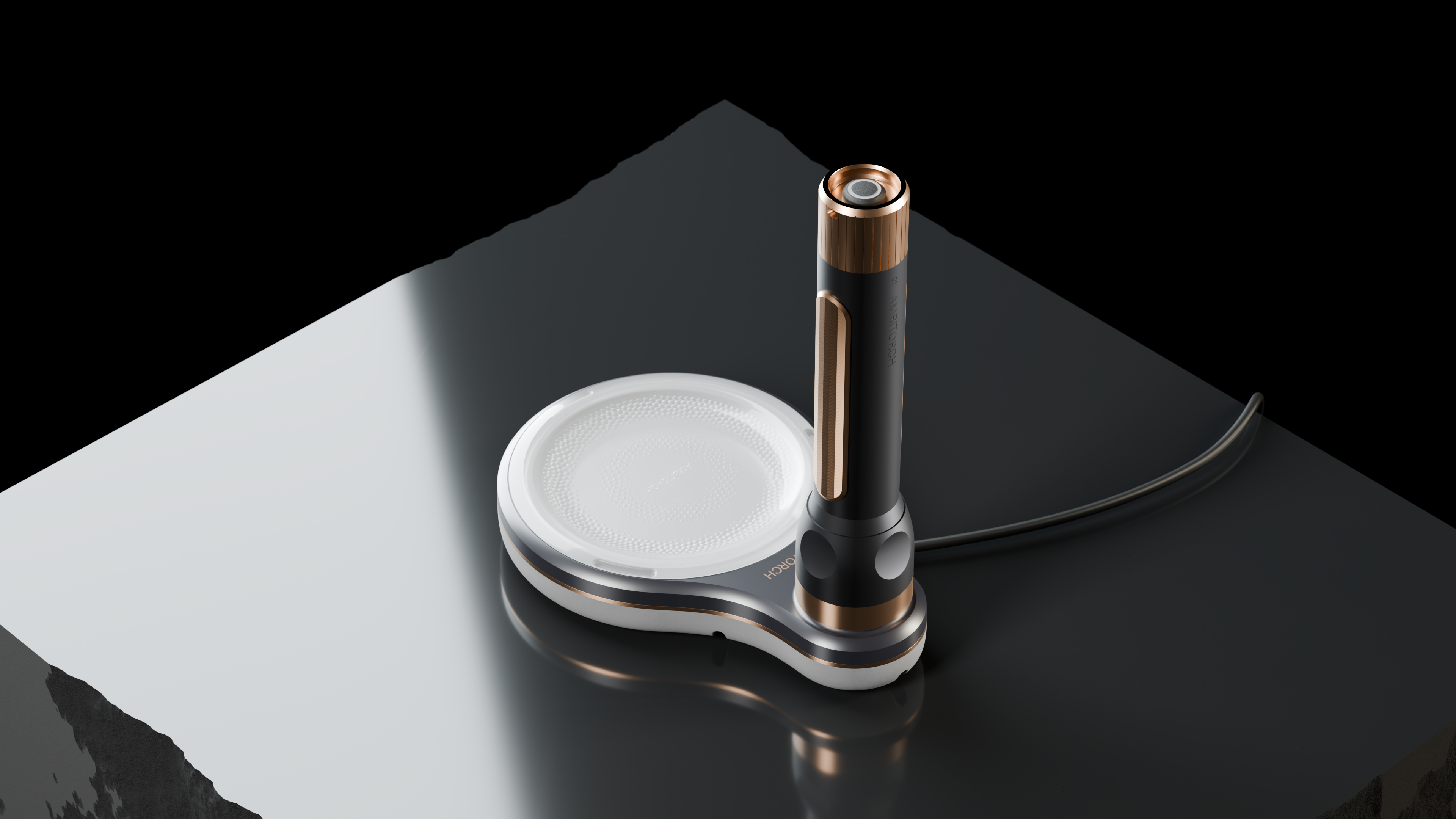
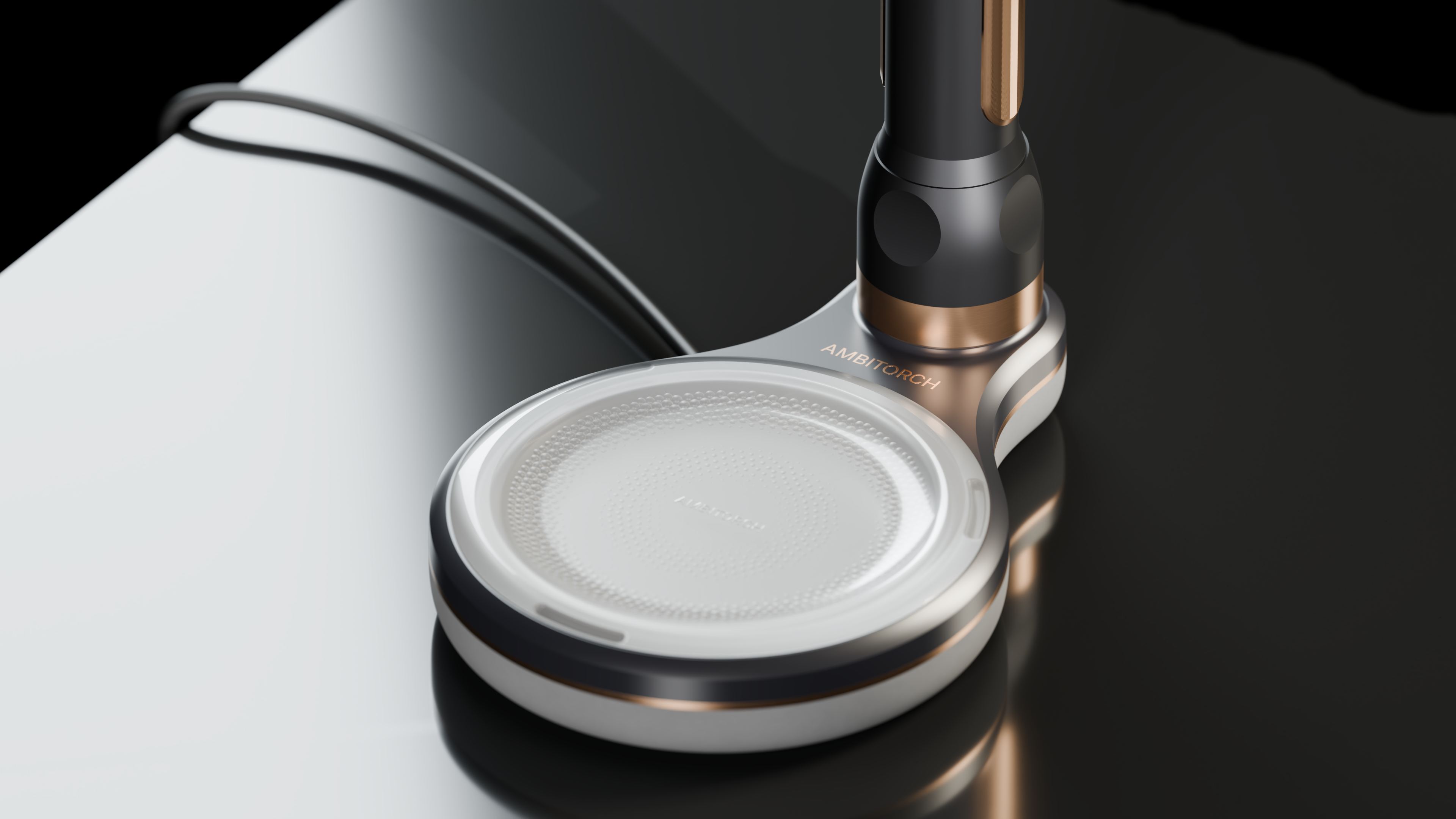
The base is made from solid concrete for weight and stability. A colored plastic shell wraps the upper part, carefully matched to the flashlight’s housing. Sandwiched in between sits a golden anodized aluminum plate to tie everything together visually and functionally.
System and Use
AmbiTorch is all about keeping things simple and flexible. The system consists of two parts: the flashlight and the matching base. On its own, the flashlight works just like you’d expect. Press the button on the end cap to switch it on, and adjust the beam by sliding the head forward or back to focus.
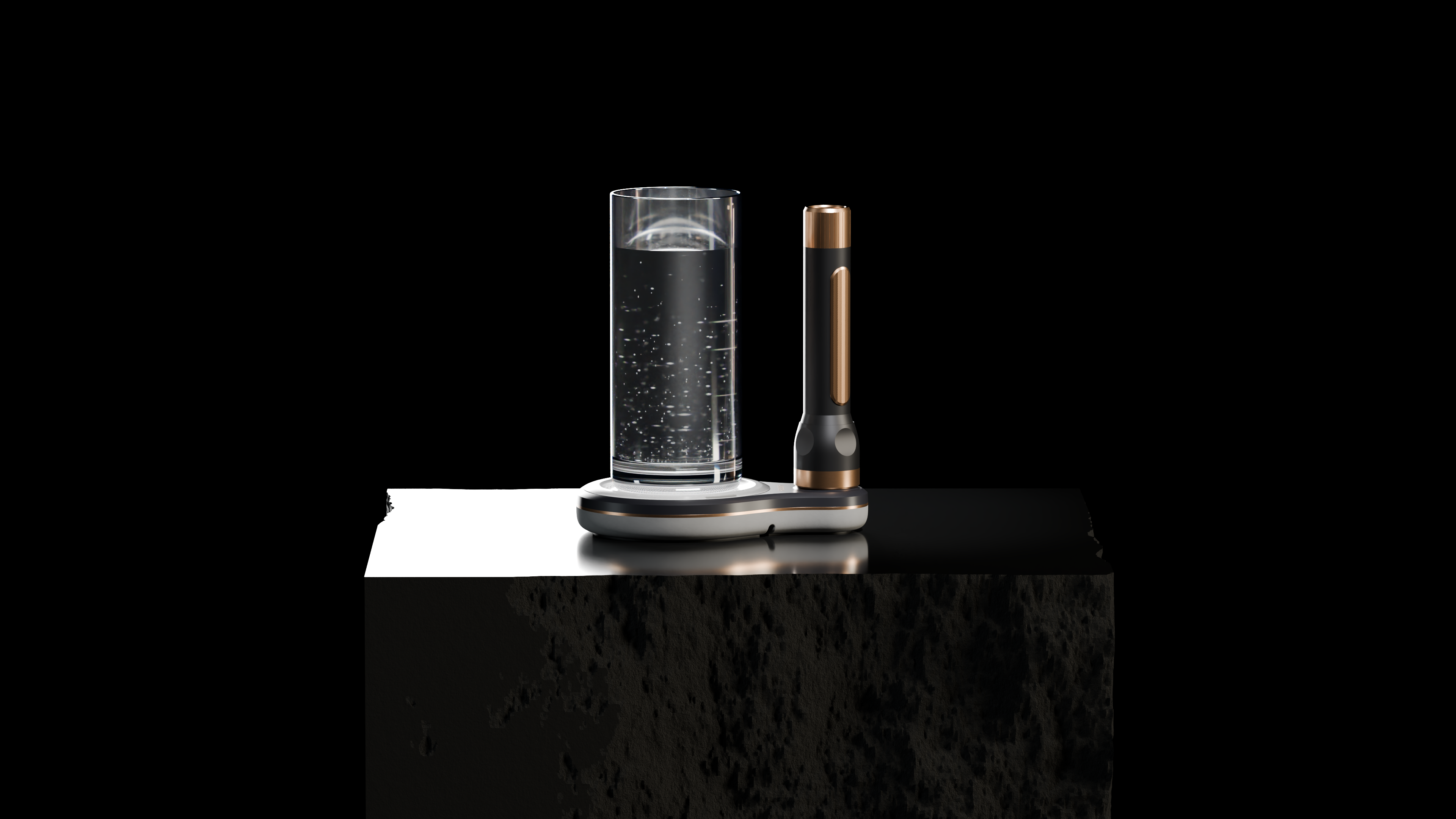
It runs on a standard 18650 battery, which can be charged via USB-C. But for everyday convenience, the flashlight can also be placed head-first into the base. Two semi-circular charging contacts near the head connect automatically, while small magnets help guide and secure the position.
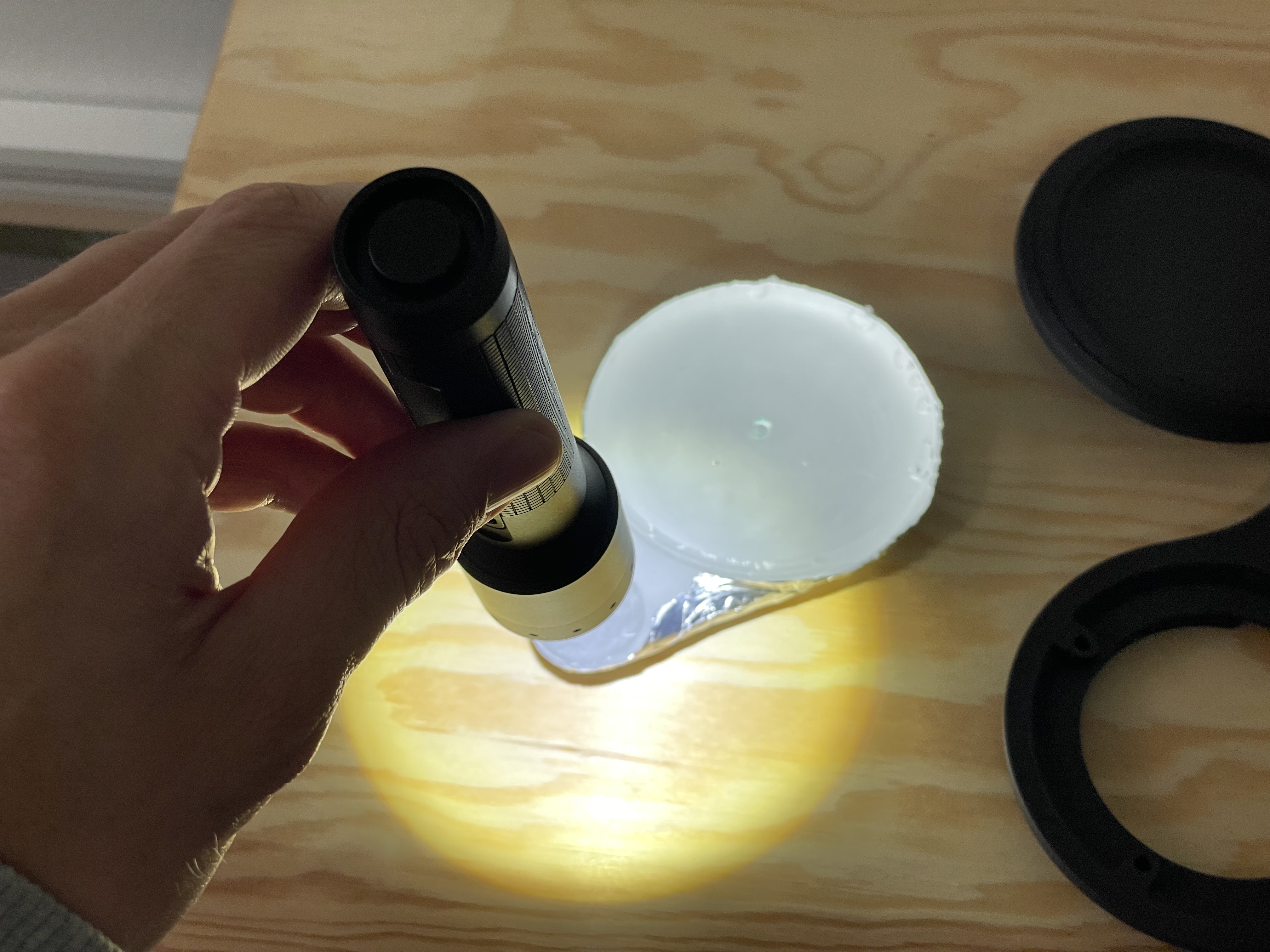
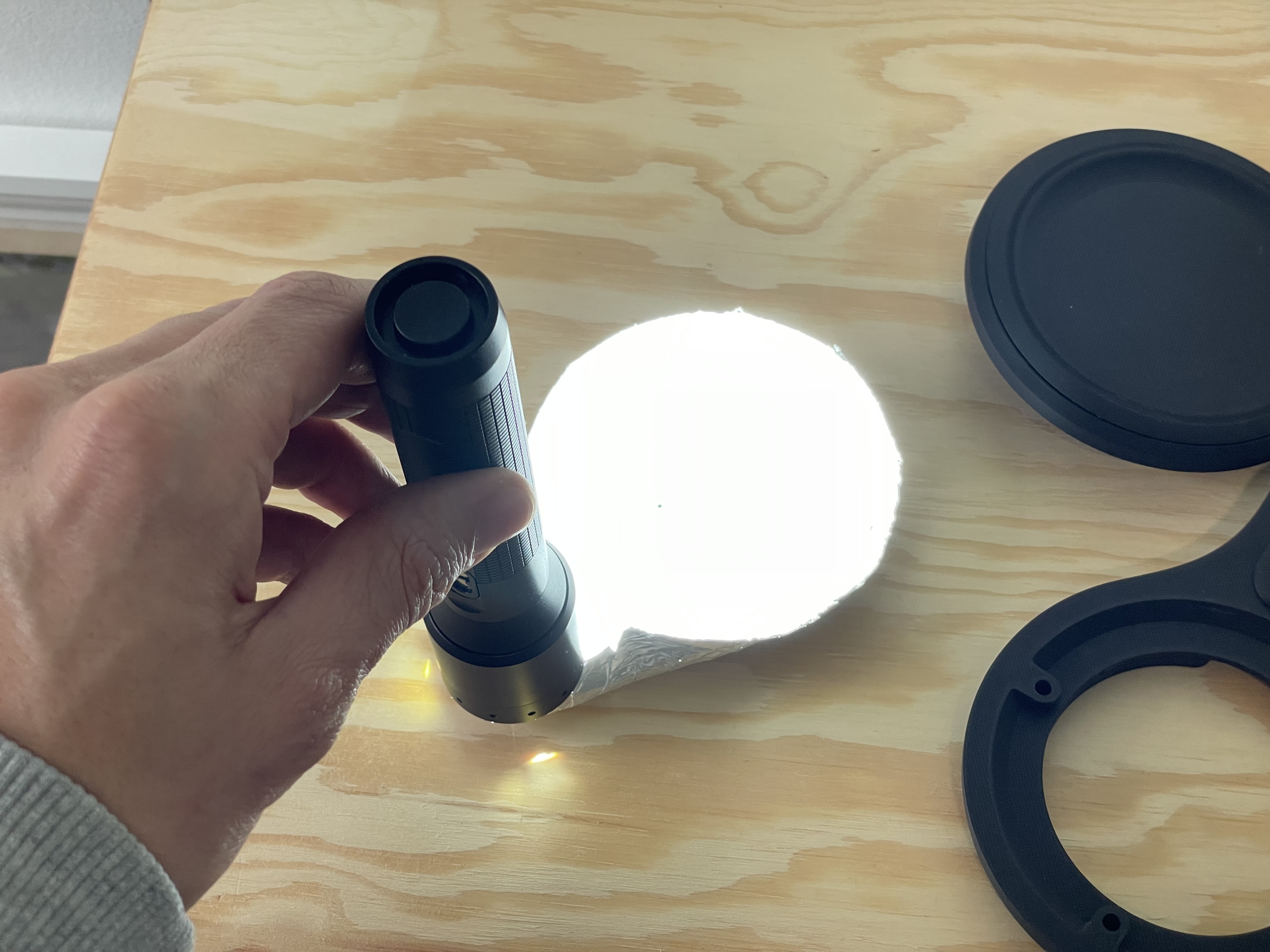
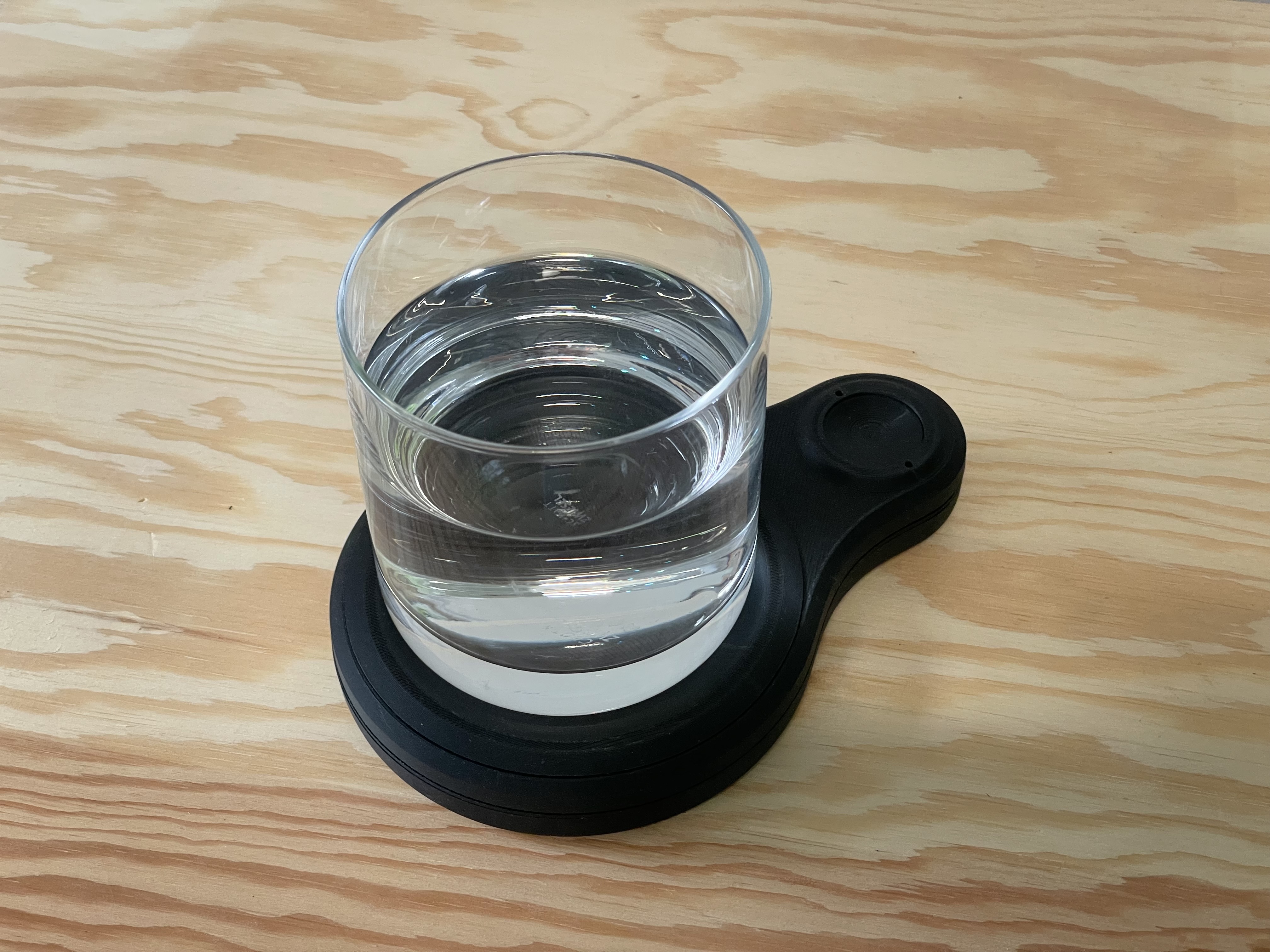
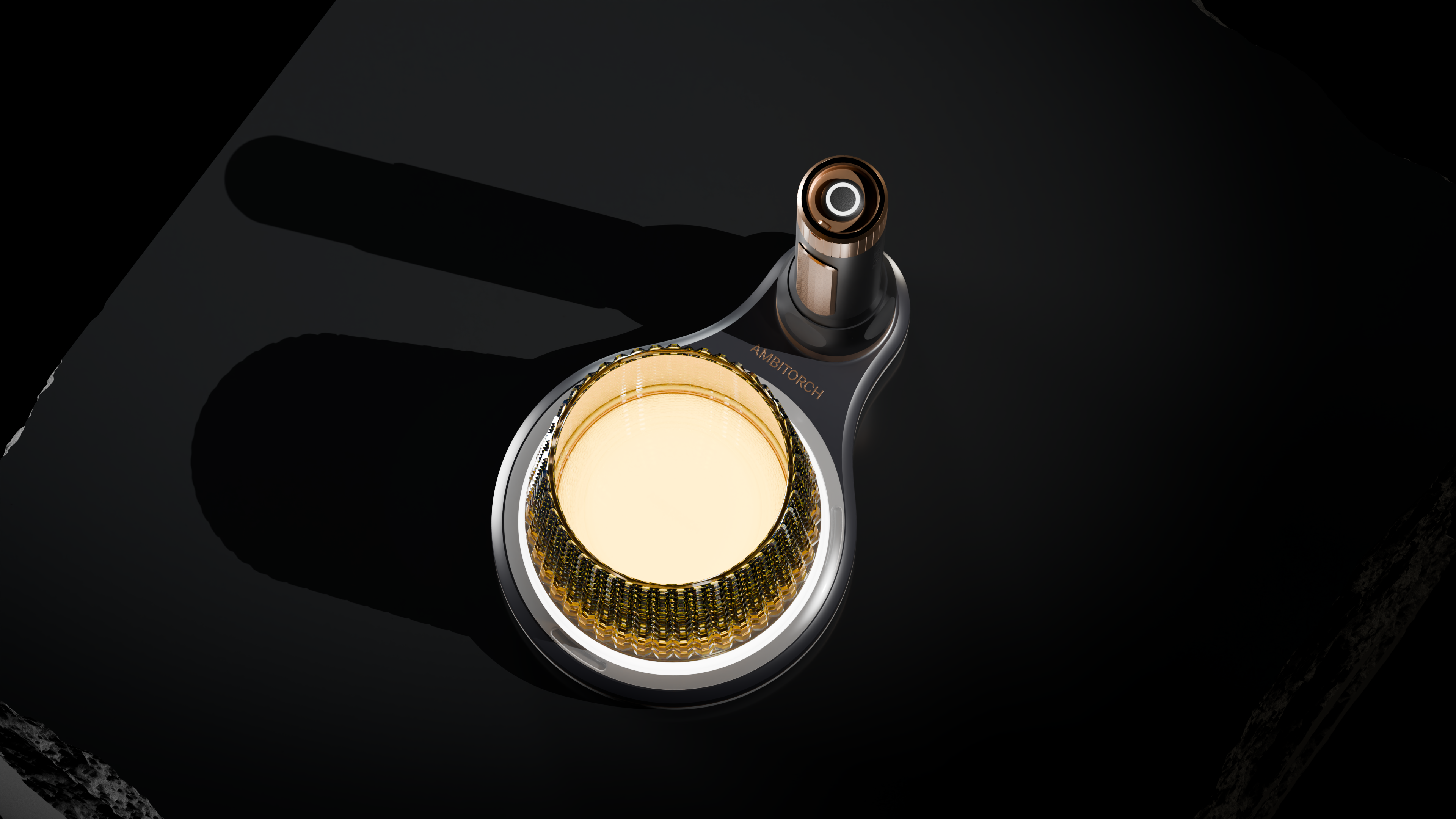
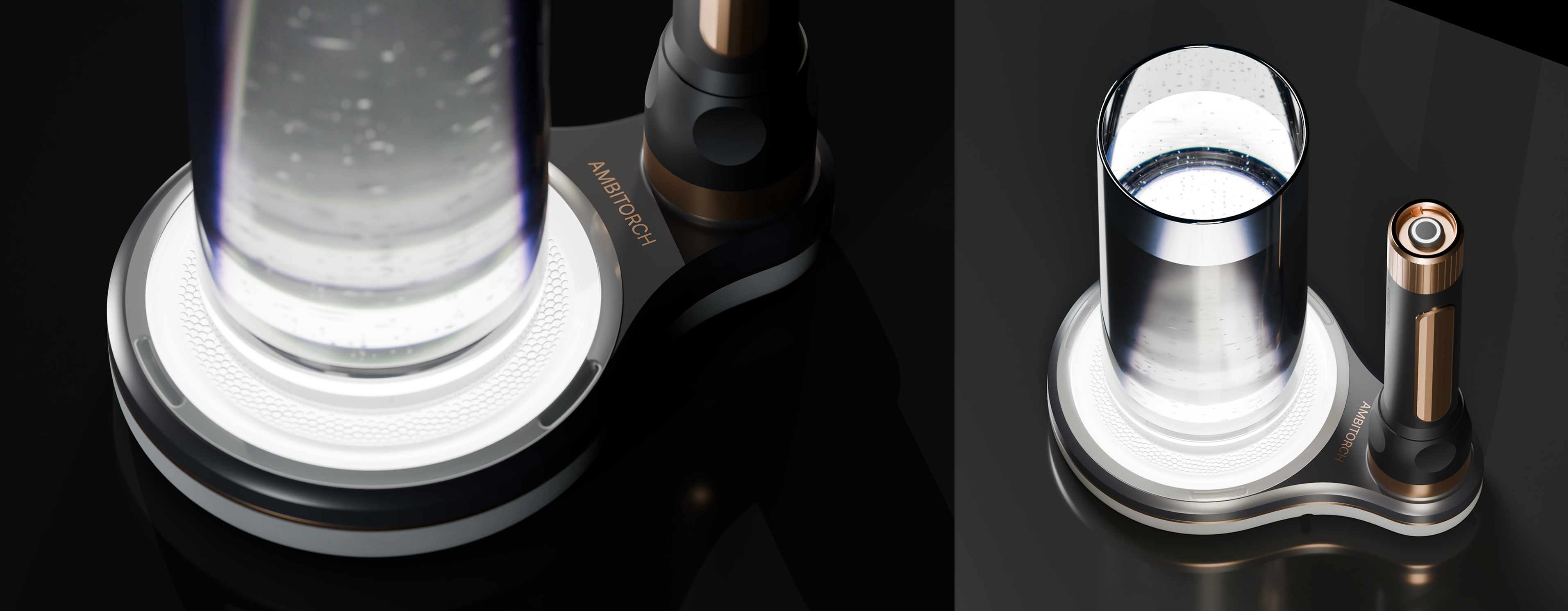
In this setup, the light is redirected downward into the base’s light conductor. With a translucent object placed on top, like a glas of water or fine whisky, it creates a soft ambient glow. This turns the flashlight into a decorative light source for relaxed evenings or social settings.
Swapping between flashlight and ambient mode is quick, smooth, and designed to feel natural.
Technical Construction & Prototyping
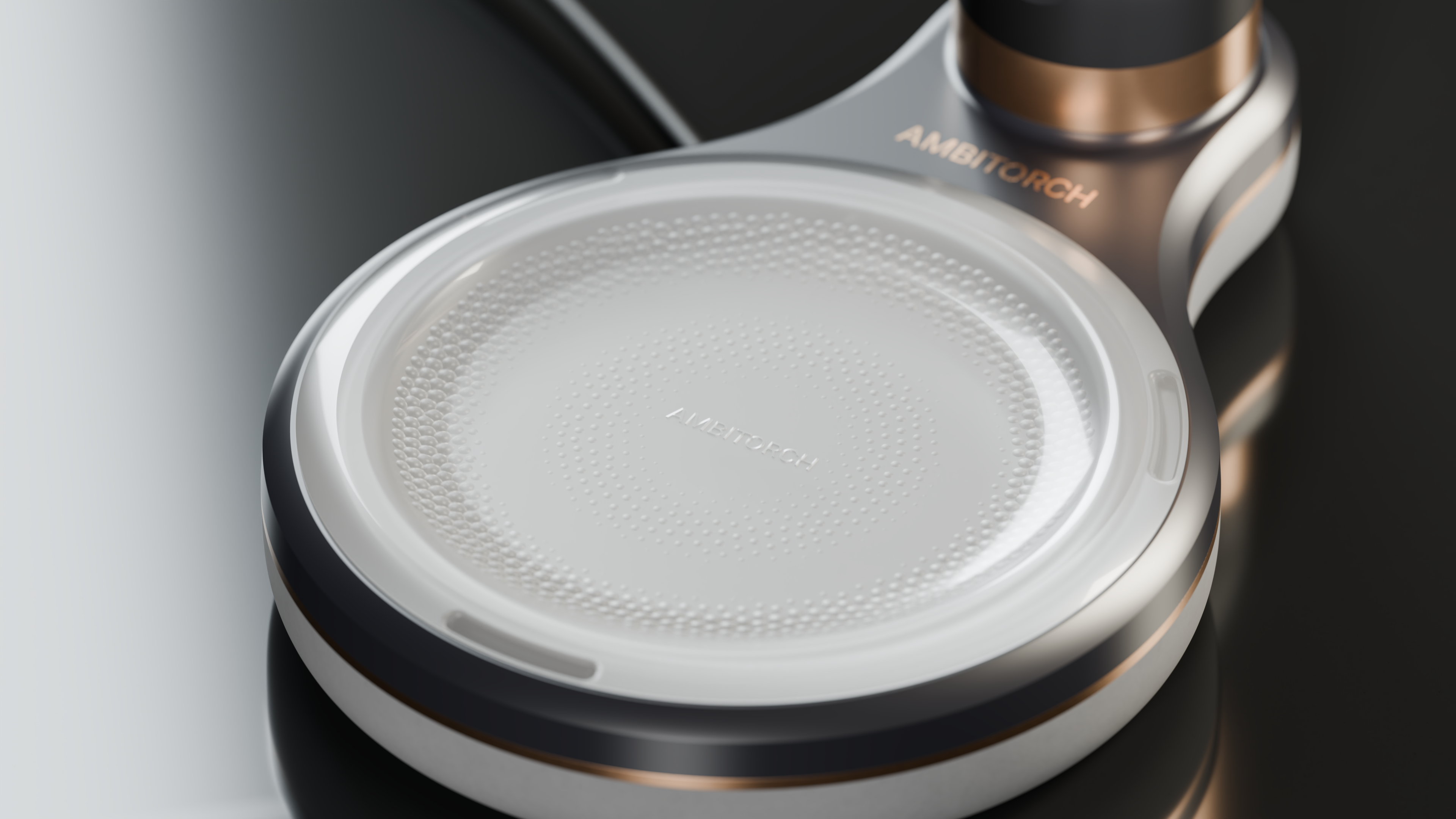
The AmbiTorch system includes a few well-considered design elements to make the setup work. On top of the base sits a flat diffuser made from translucent, slightly milky polycarbonate. It’s easy to clean and features a subtle pattern on the underside to help spread the light more evenly across the surface. Right in the center, the AMBITORCH logo is embossed.
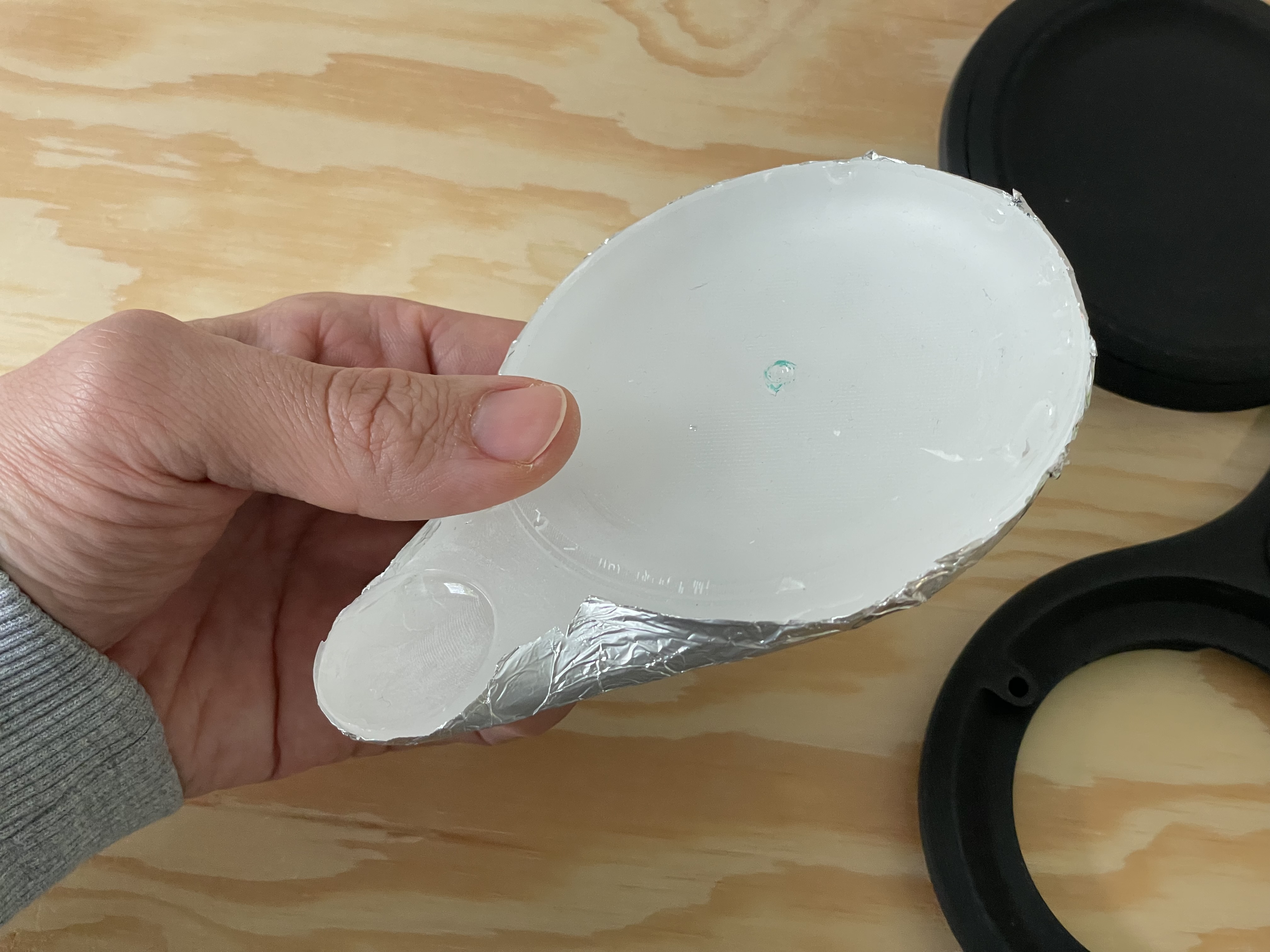
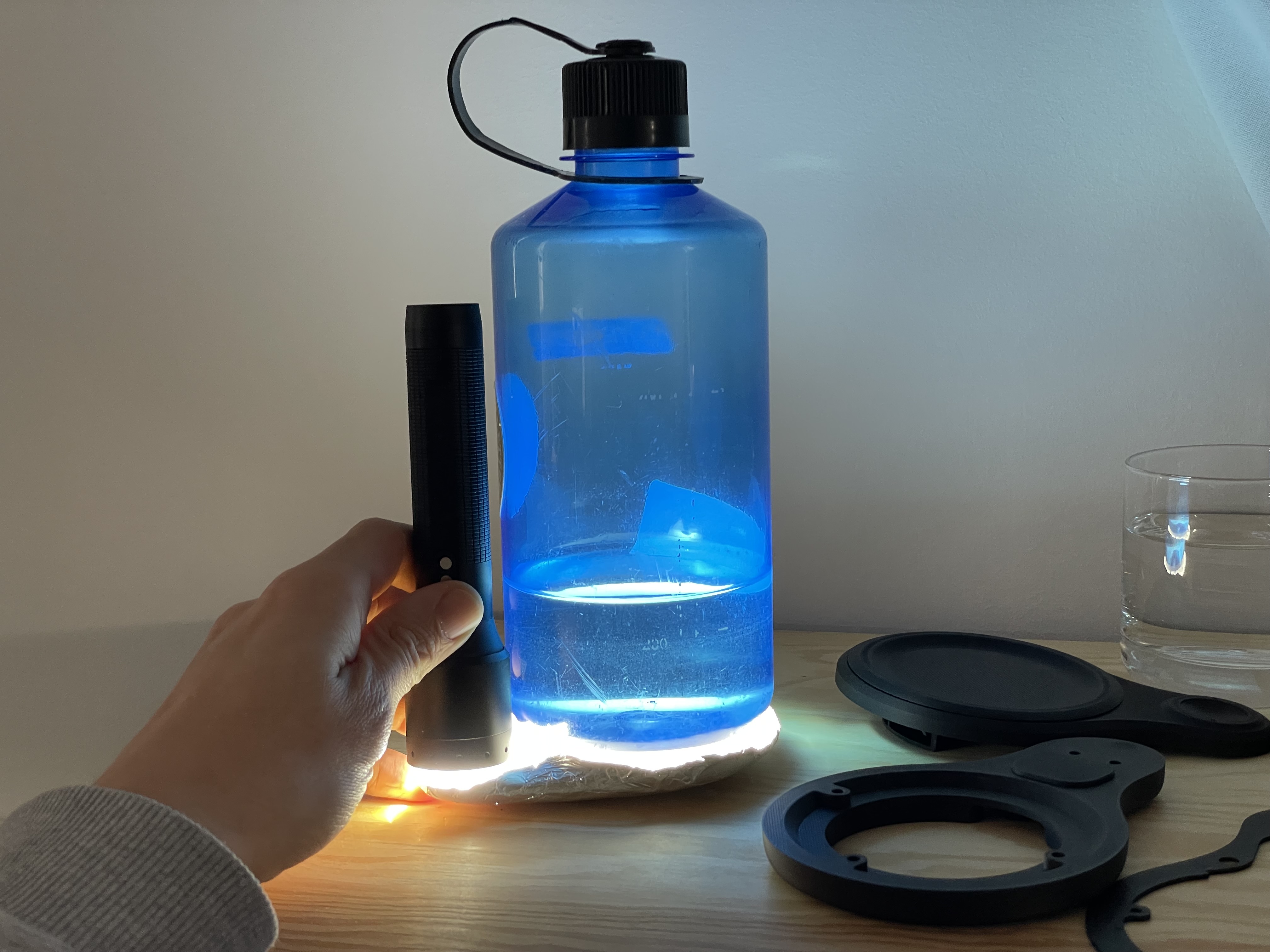
The light conductor is made from solid polycarbonate. To avoid losing brightness, the outer surface is chrome-coated except at the entry and exit points where the light goes in and out. This helps keep the light inside and focused where it’s needed.
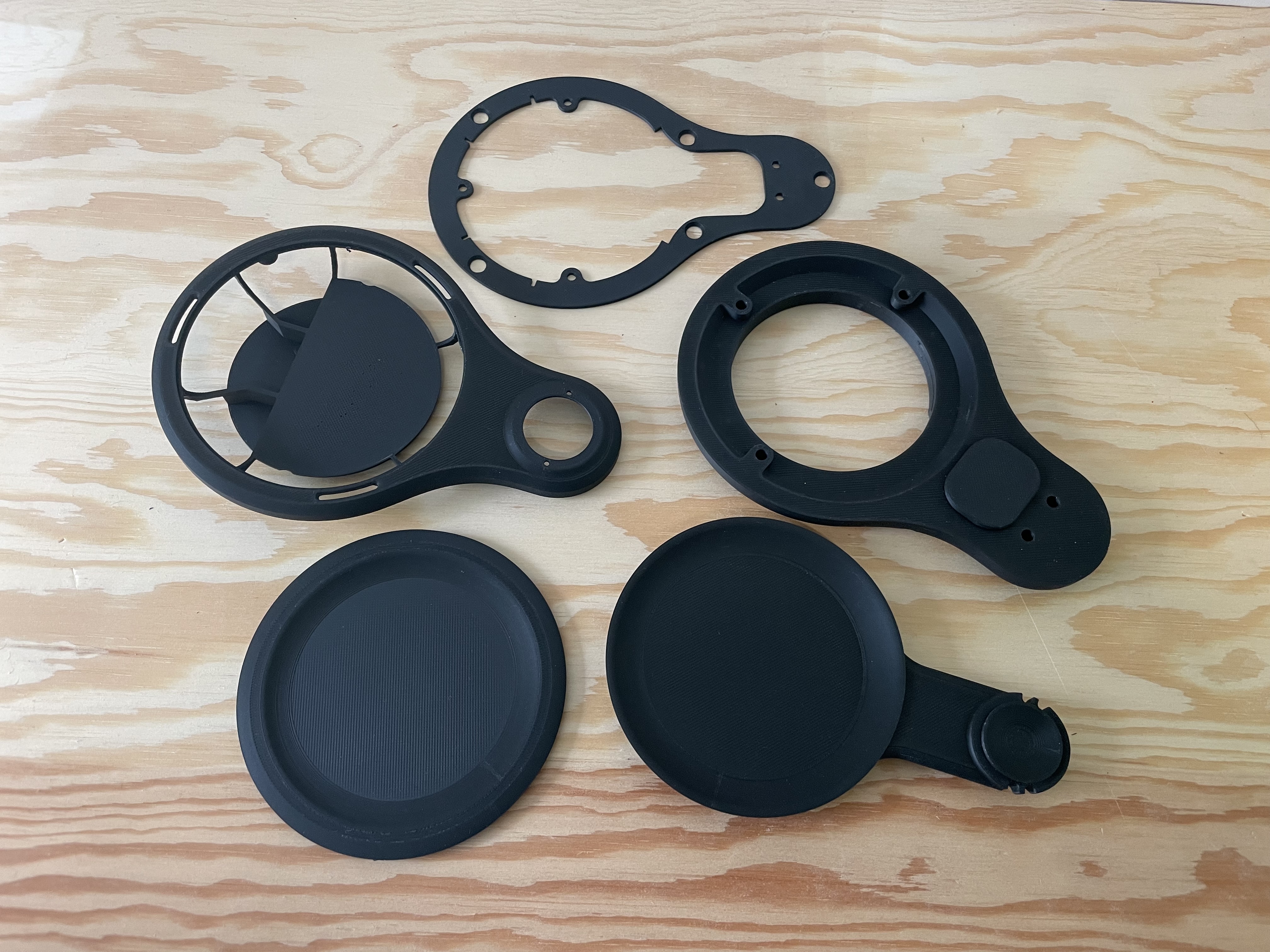
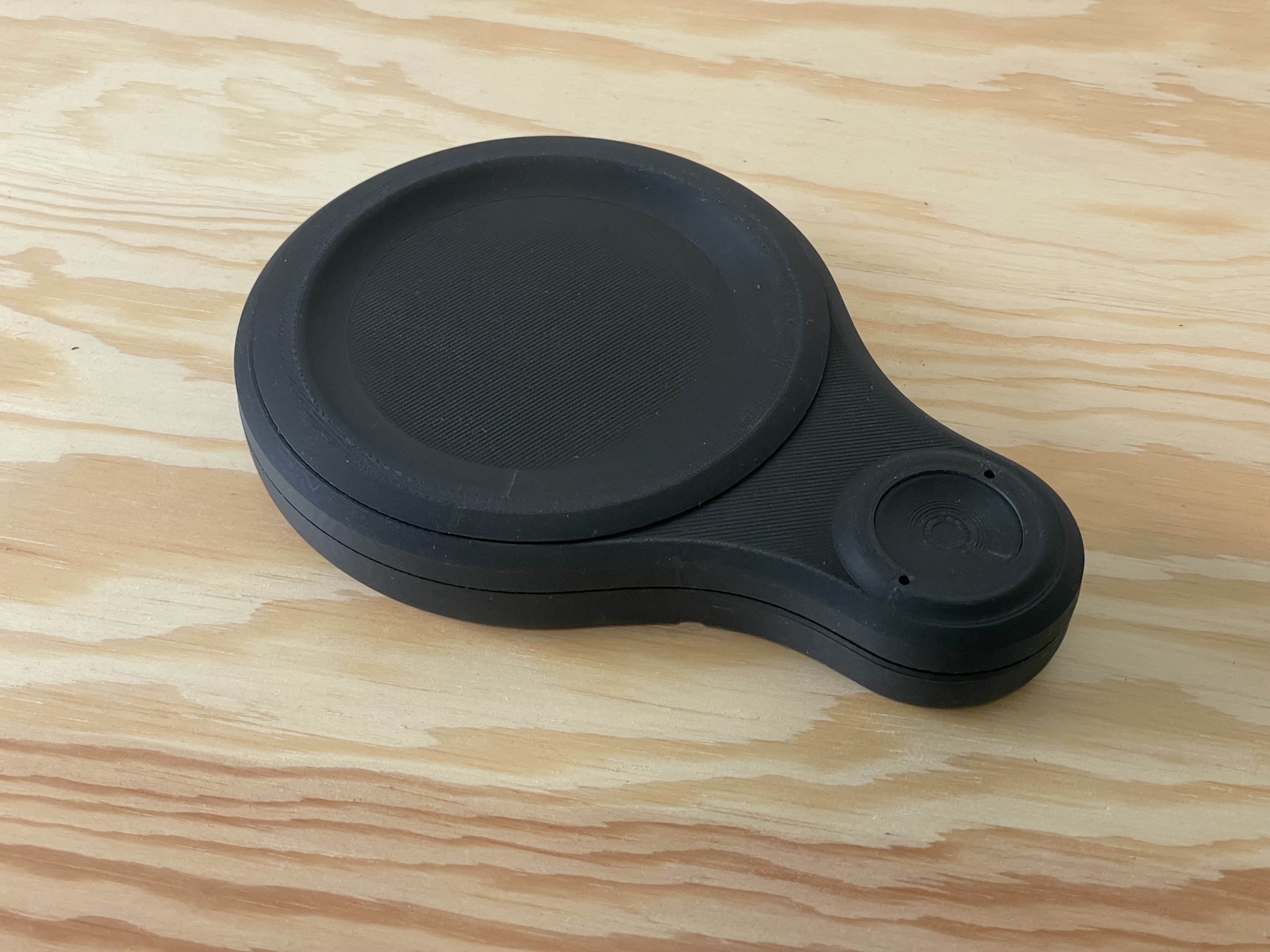
To test the concept early on, I made a quick prototype using clear epoxy resin and a 3D-printed mold. Instead of chrome, I wrapped the part in aluminum foil. It was a rough setup, but it did the job. After that, I printed the full base assembly to check proportions and the fit between parts.
Conclusion
This project wasn’t just about designing another flashlight. It was about showing how a structured design process can turn everyday objects into something more - by looking closely, asking the right questions, and staying open to unexpected ideas.
From early research and ideation to prototyping and design, AMBITORCH reflects the way I approach design challenges. It shows that real innovation doesn’t always mean reinventing everything. Sometimes, it’s about combining known elements in a new, meaningful way.
Of course, no concept is perfect. Experts will find weak points, and some ideas might not work exactly as planned. And that’s part of the process. Product development is never a straight line. Things fail, ideas shift, and that’s how better solutions emerge - together, step by step.
Whether a concept makes it to market or not, each iteration brings us closer to something truly valuable. That’s the mindset behind AMBITORCH.
 Winter Industrial Design