AMBITRORCH
Another flashlight? Well, hold on.
In Industrial Design, creating product innovations requires a plan. It’s not just about coming up with a cool idea—it’s about identifying where real innovation can happen. During my studies at the University of Wuppertal, I learned important tools that I still use in my daily work. When it comes to client projects, there’s a clear distinction to be made: Do they want styling or true innovation? Sometimes it’s about tweaking something existing, and if that’s the case, great! But what if they’re looking for a true product innovation, or even a unique selling point (USP)?
That’s where the fun begins.
The Task
The AMBITORCH project is a perfect example of how I approach such challenges. Here’s the task I set for myself:
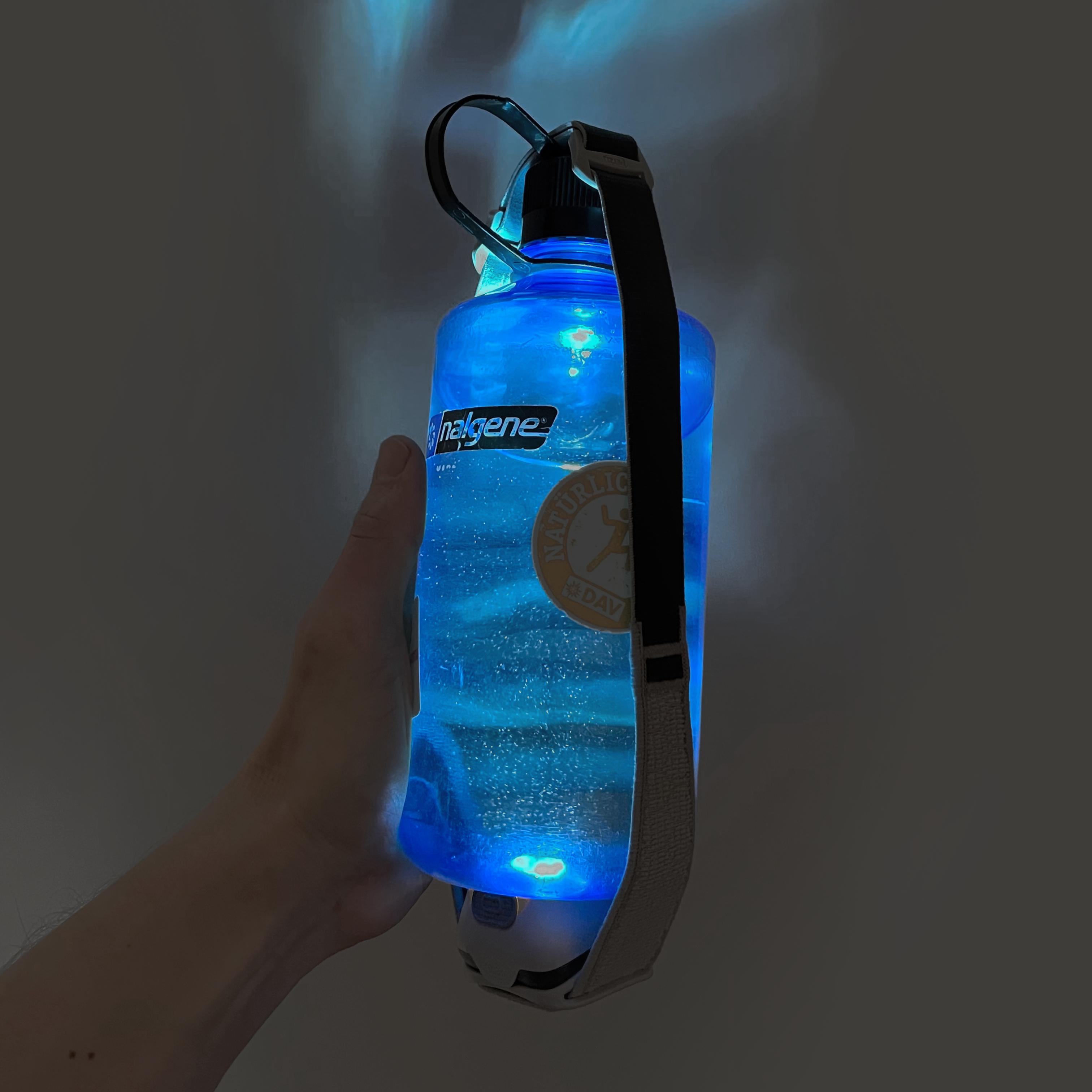
“Design a versatile mobile outdoor torch that combines high-performance lighting for dog walkers with a cozy, atmospheric light setting for small group gatherings. The torch should provide optimal brightness for activities like walking in low light conditions, while also offering a softer, ambient light mode to illuminate a small outdoor area (for 2-4 people), ideal for settings like campgrounds or patios in the evening.”
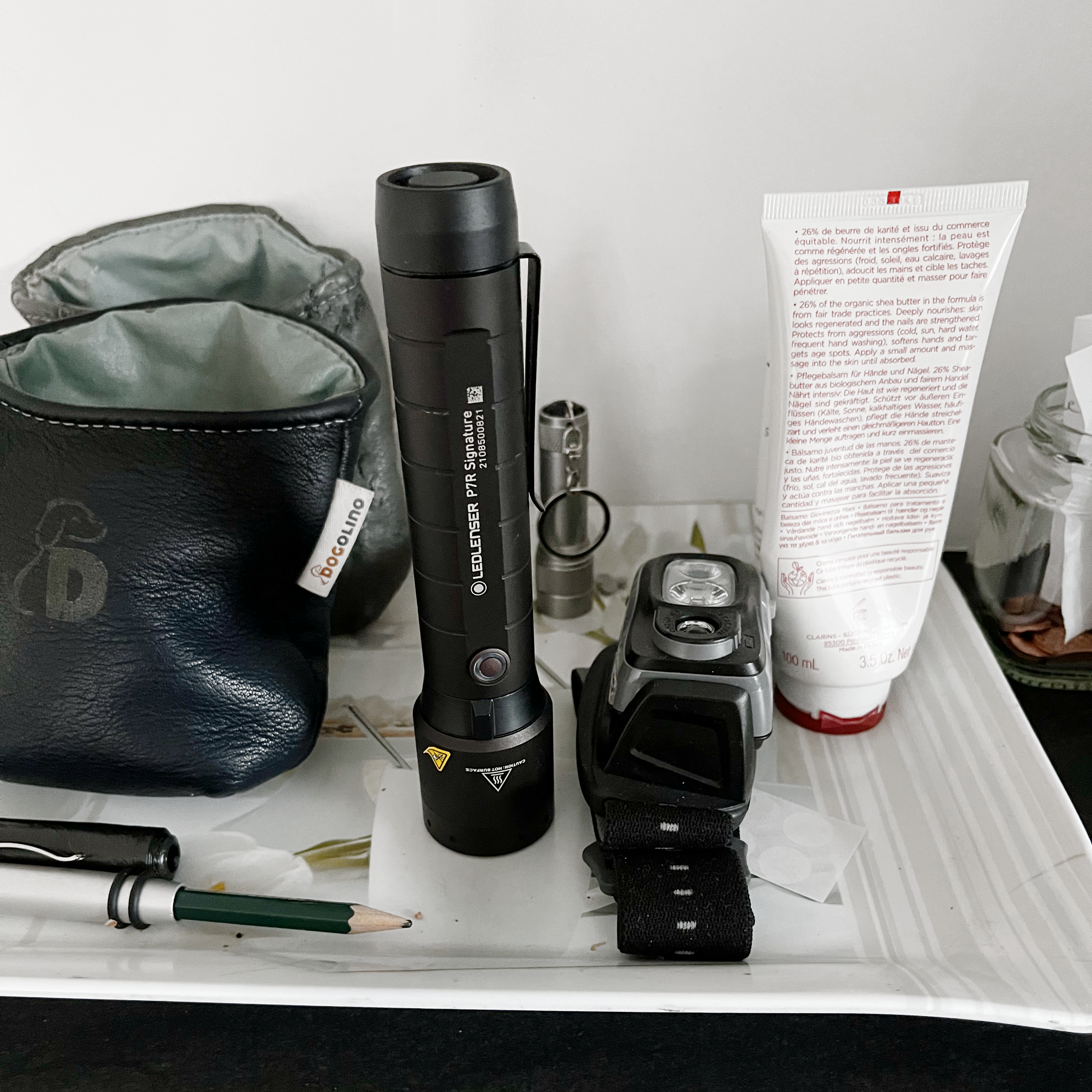
To start, I conducted some online and in-store research to get a feel for existing products. After narrowing down the target audience, I did some informal surveys with people in my network, asking them about their needs and wants. Typically, research for a project like this would be far more extensive, with more opinions and product testing involved. However, for this portfolio project, I wanted to focus more on the conceptual phase, so I’ll keep this part short.
Potentials
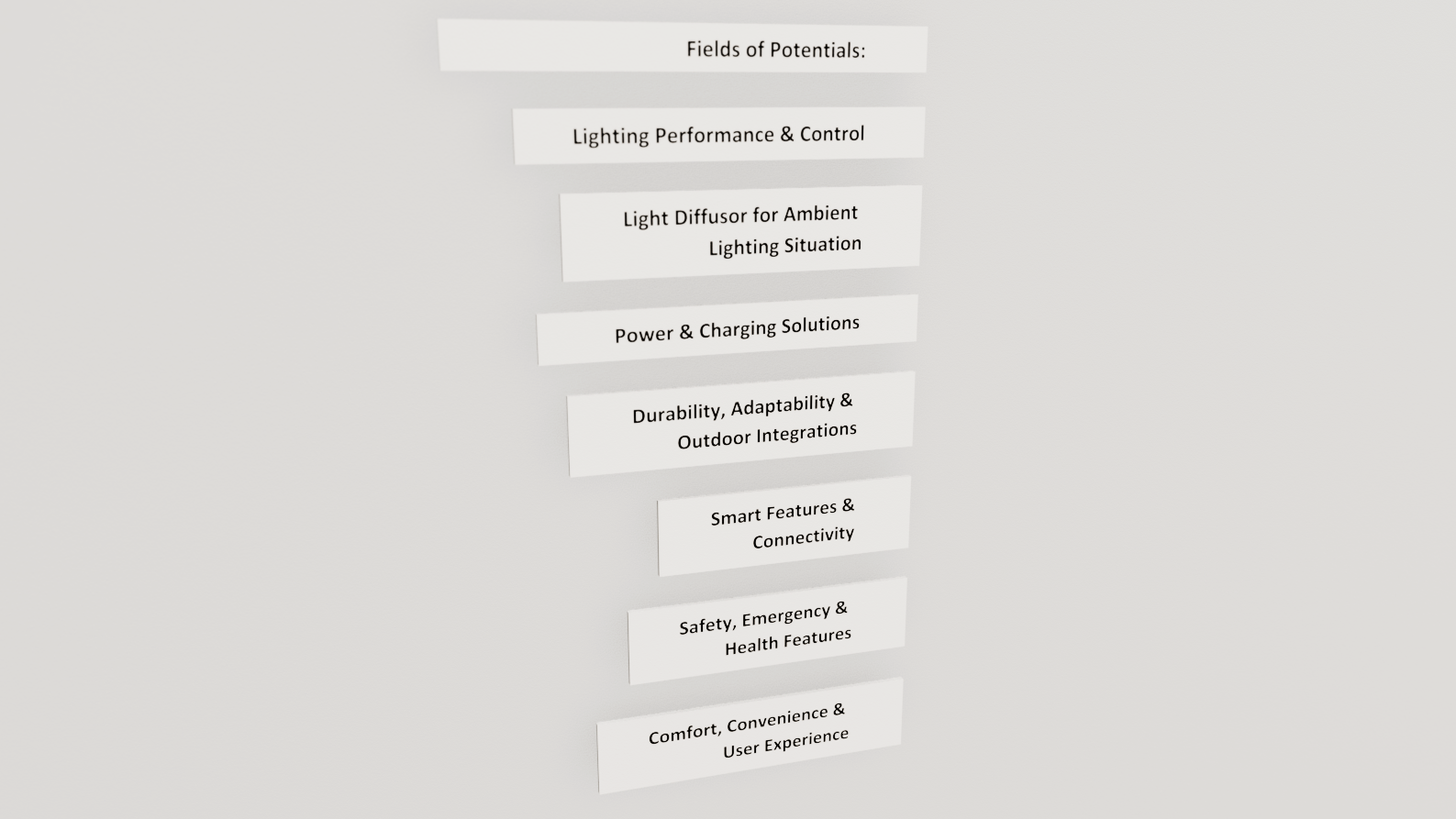
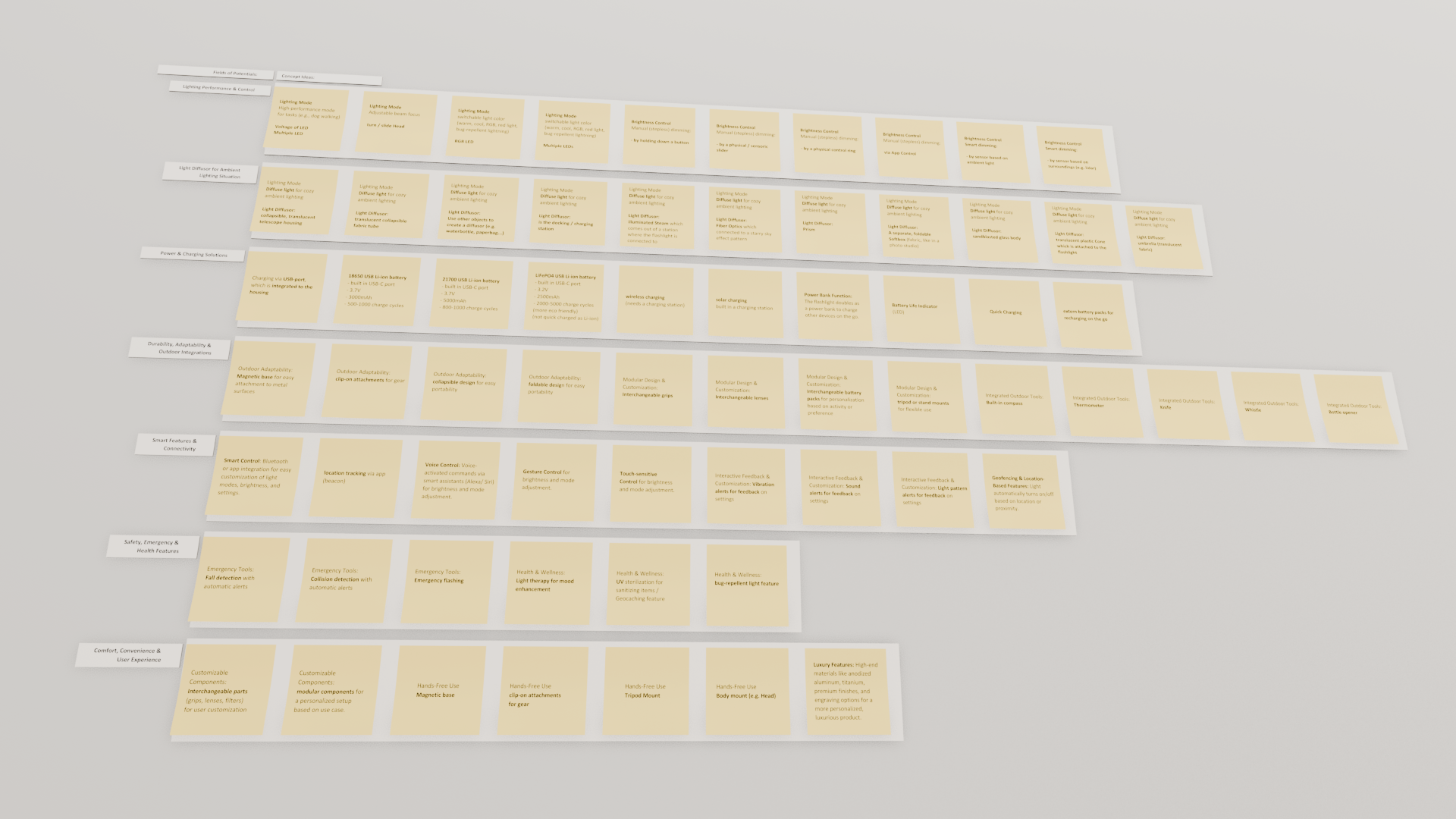
The research revealed several key potential areas that were most relevant for our target audience. These included:
- Lighting Performance & Control
- Light Diffuser for Ambient Lighting
- Power & Charging Solutions
- Durability, Adaptability & Outdoor Integration
- Smart Features & Connectivity
- Safety, Emergency & Health Features
- Comfort, Convenience & User Experience
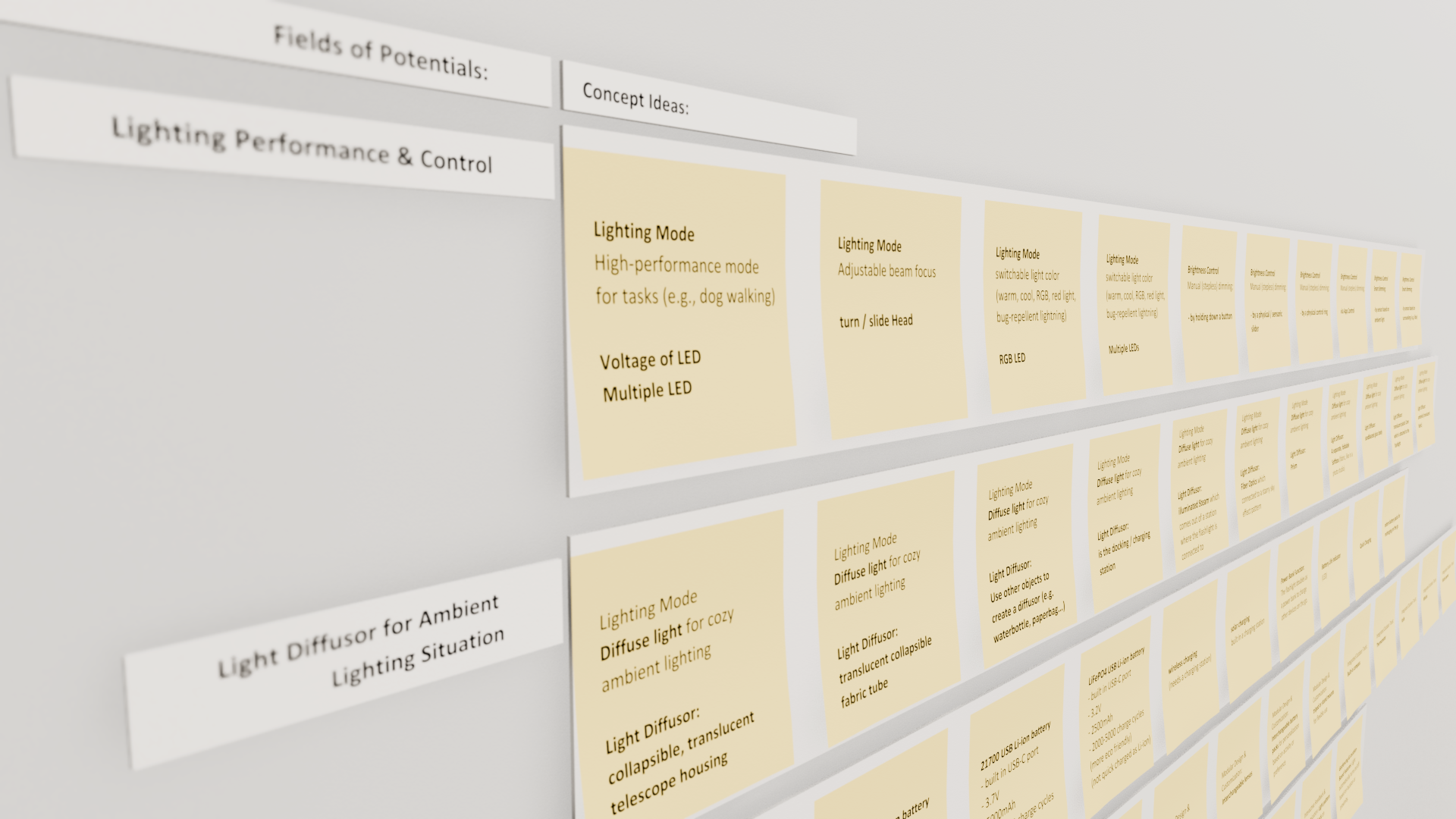
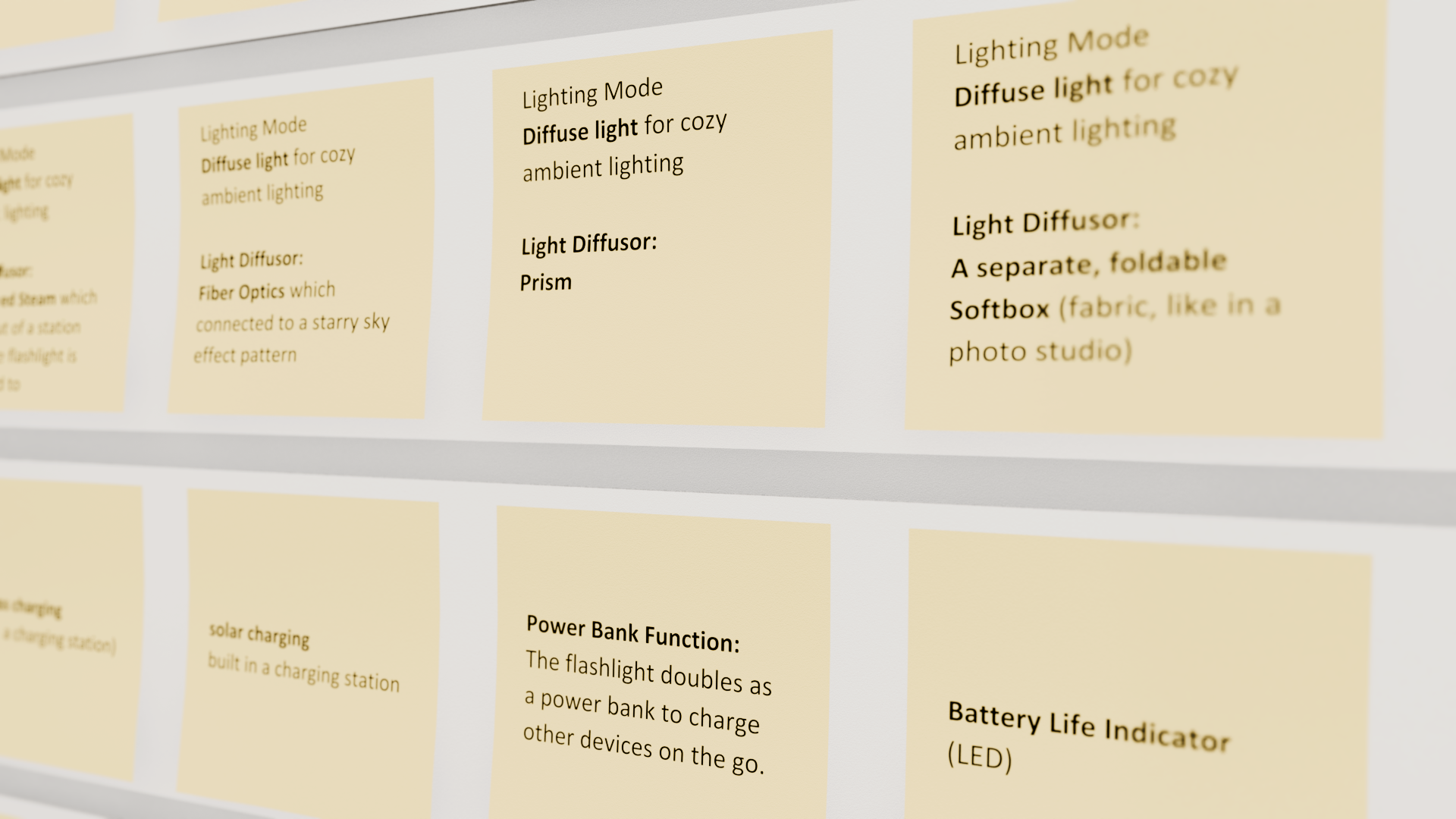
These potential areas serve as the foundation for the brainstorming sessions, where tons of small individual concepts—referred to as “Global Concepts”—are generated. At this stage, anything goes! It’s important to leave judgment aside and allow for free-flowing ideas. Insights from other industries and recent technological innovations are encouraged at this point. As a Senior Industrial Designer, I’ve worked across many product categories, so I draw from my diverse background to inspire ideas.
Evaluation of Global Concepts
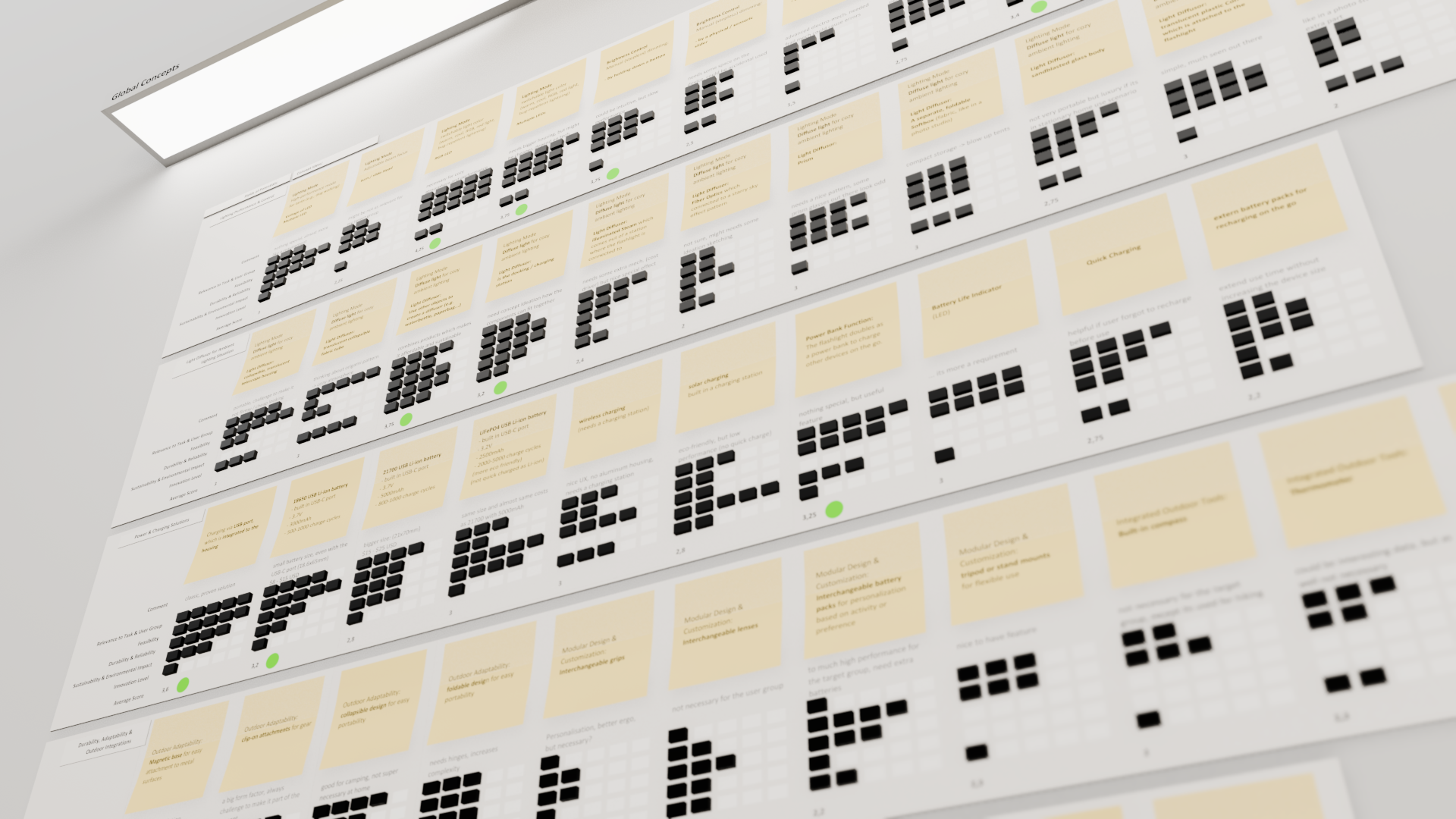
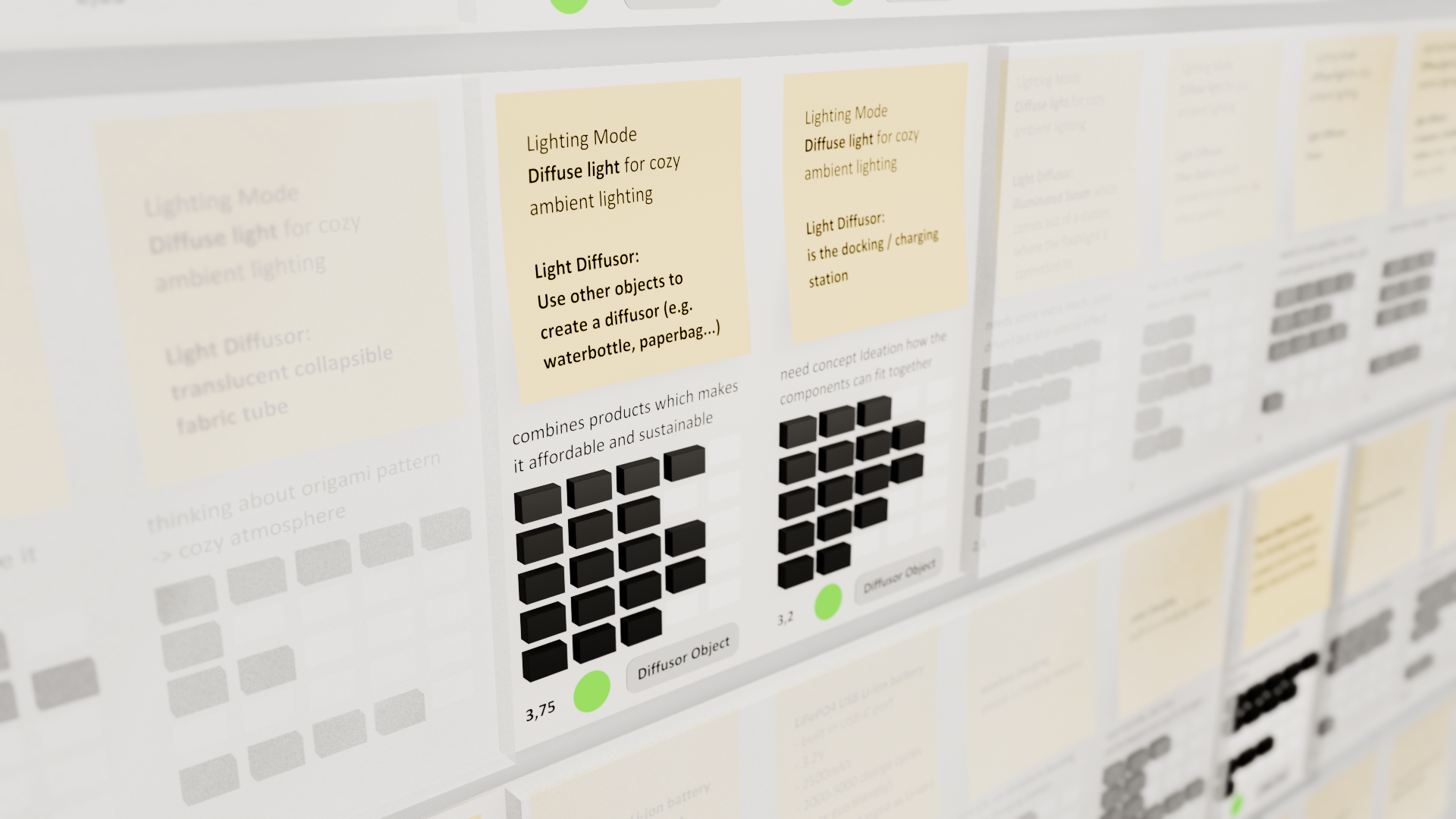
Once the potential areas are filled with enough concepts, it’s time to evaluate. We set specific criteria to guide the process:
- Relevance to Task & User Group
- Feasibility
- Durability & Reliability
- Sustainability & Environmental Impact
- Innovation Level
Each concept is rated on a scale of 1-5, and the average score helps guide which ideas move forward. The highest-scoring concepts are refined, while others are set aside (but never completely discarded).

Consolidation
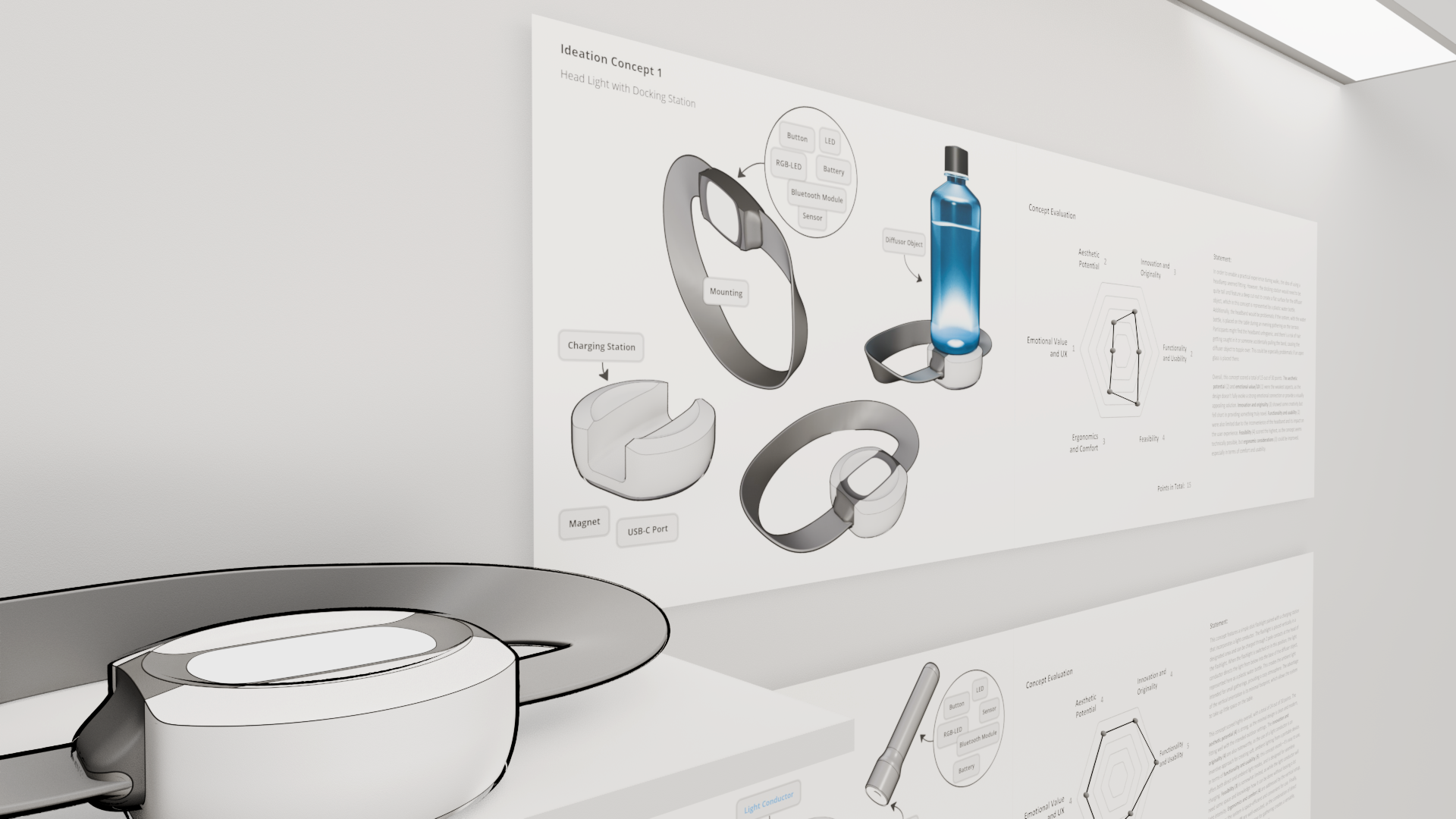
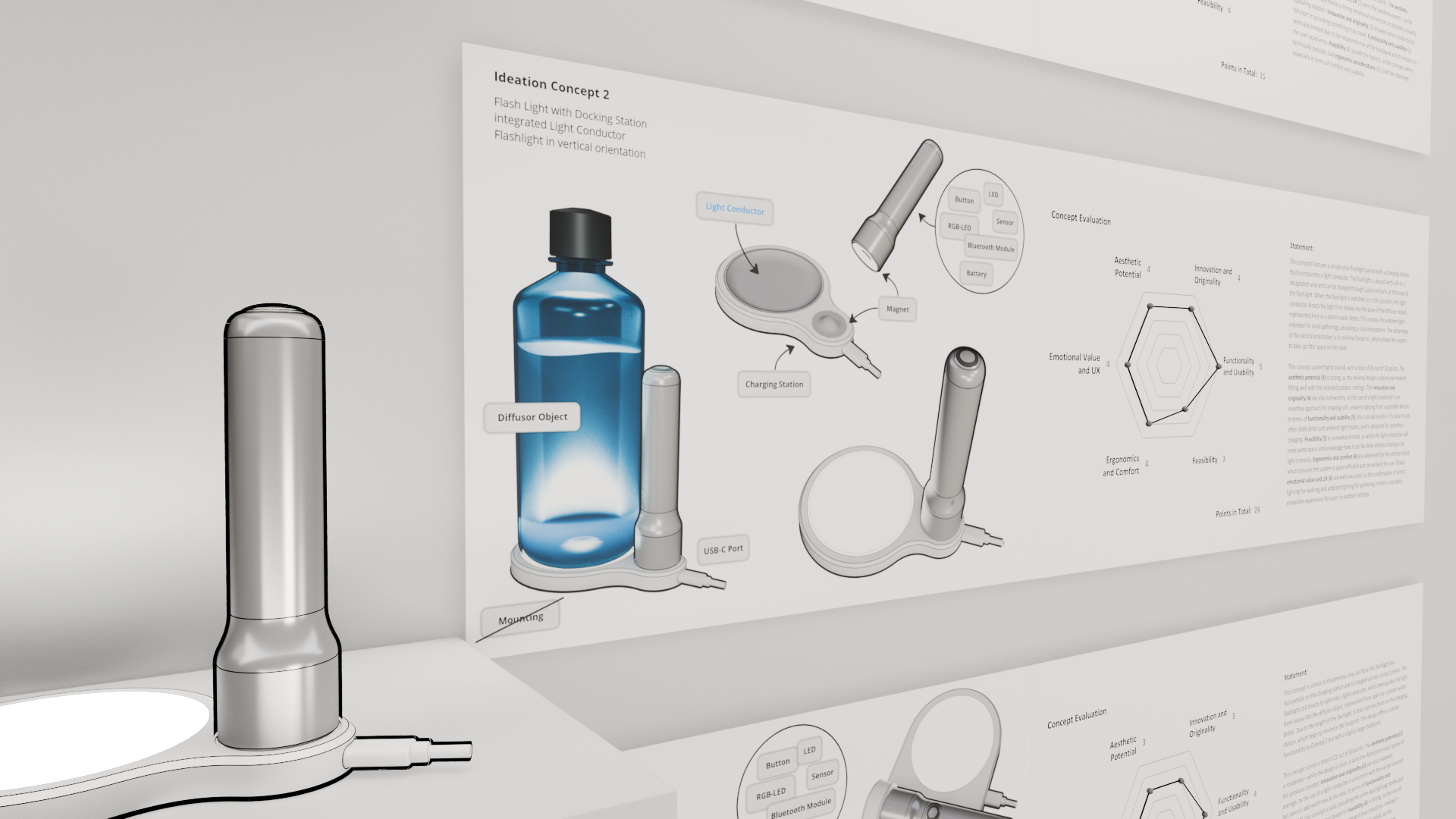
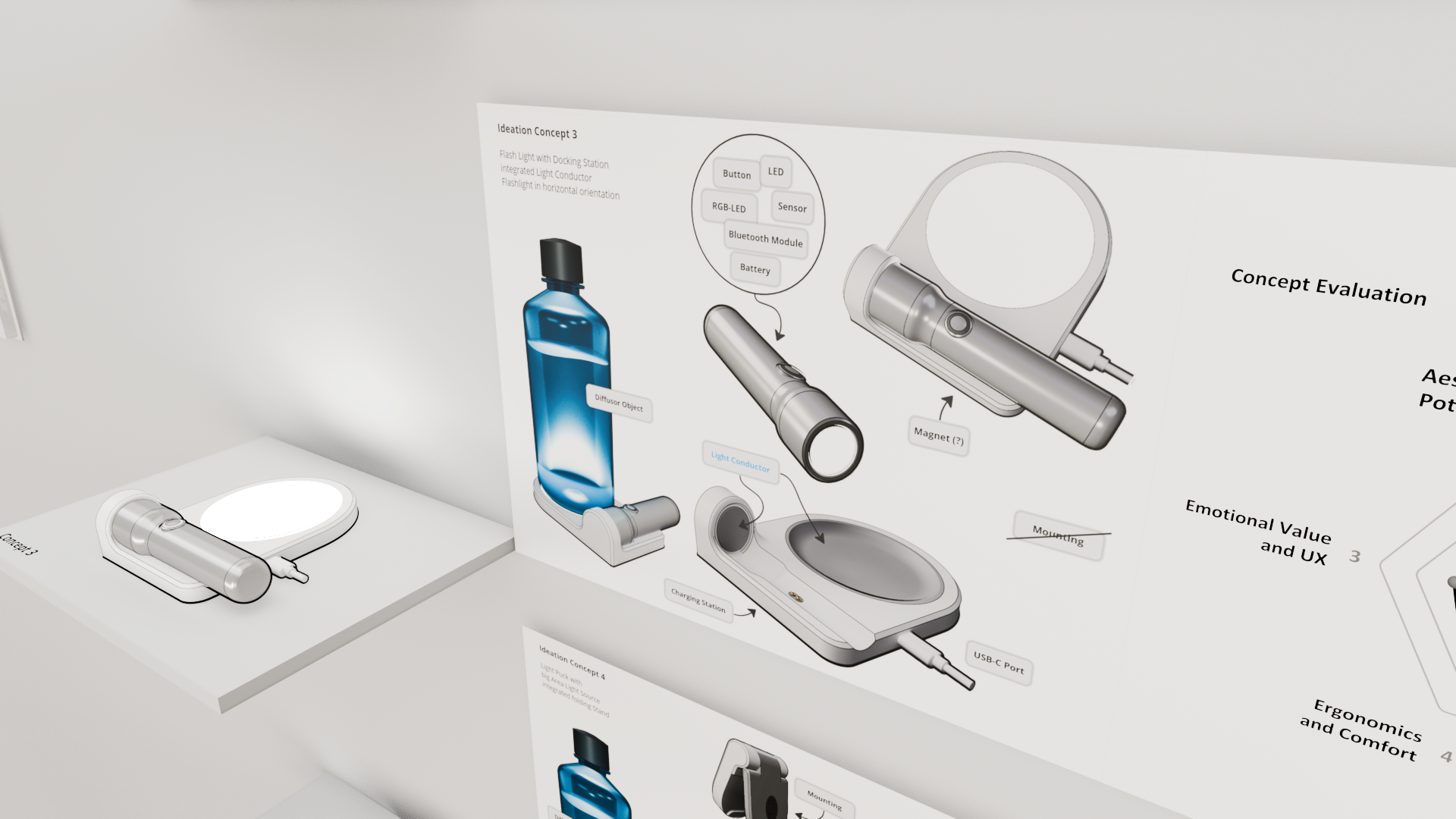
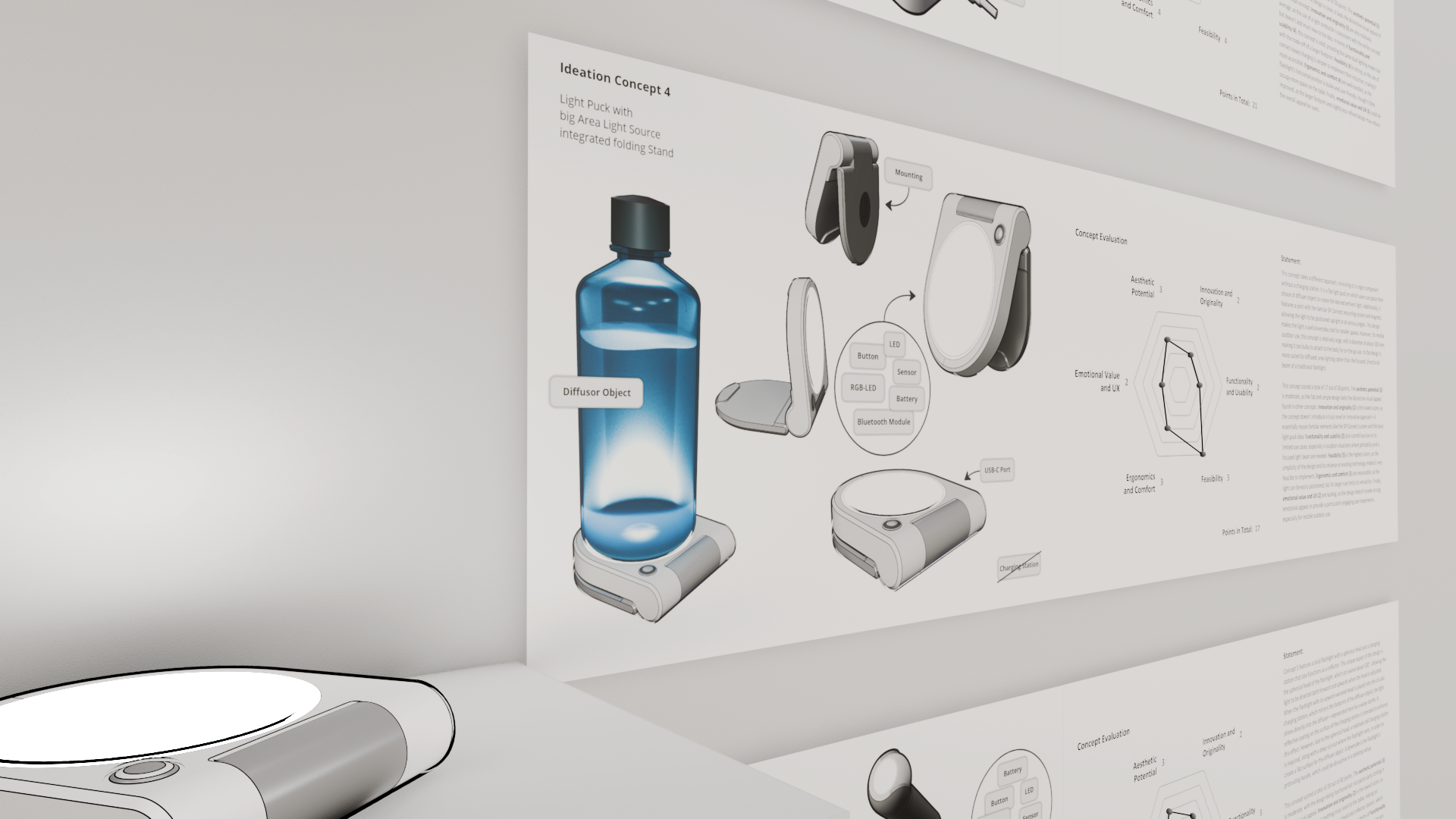
Then comes the fun part: the design cooking! How do the individual concepts best come together? At this stage, I create quick 3D-CAD sketches to illustrate the idea. This is not about perfecting the aesthetic yet, but about getting the essence of the concept across. Ideally, I’ve already got CAD components for the internal parts, so I can consider dimensions and functionality while working on the concept’s core features.
Evaluate Consolidations
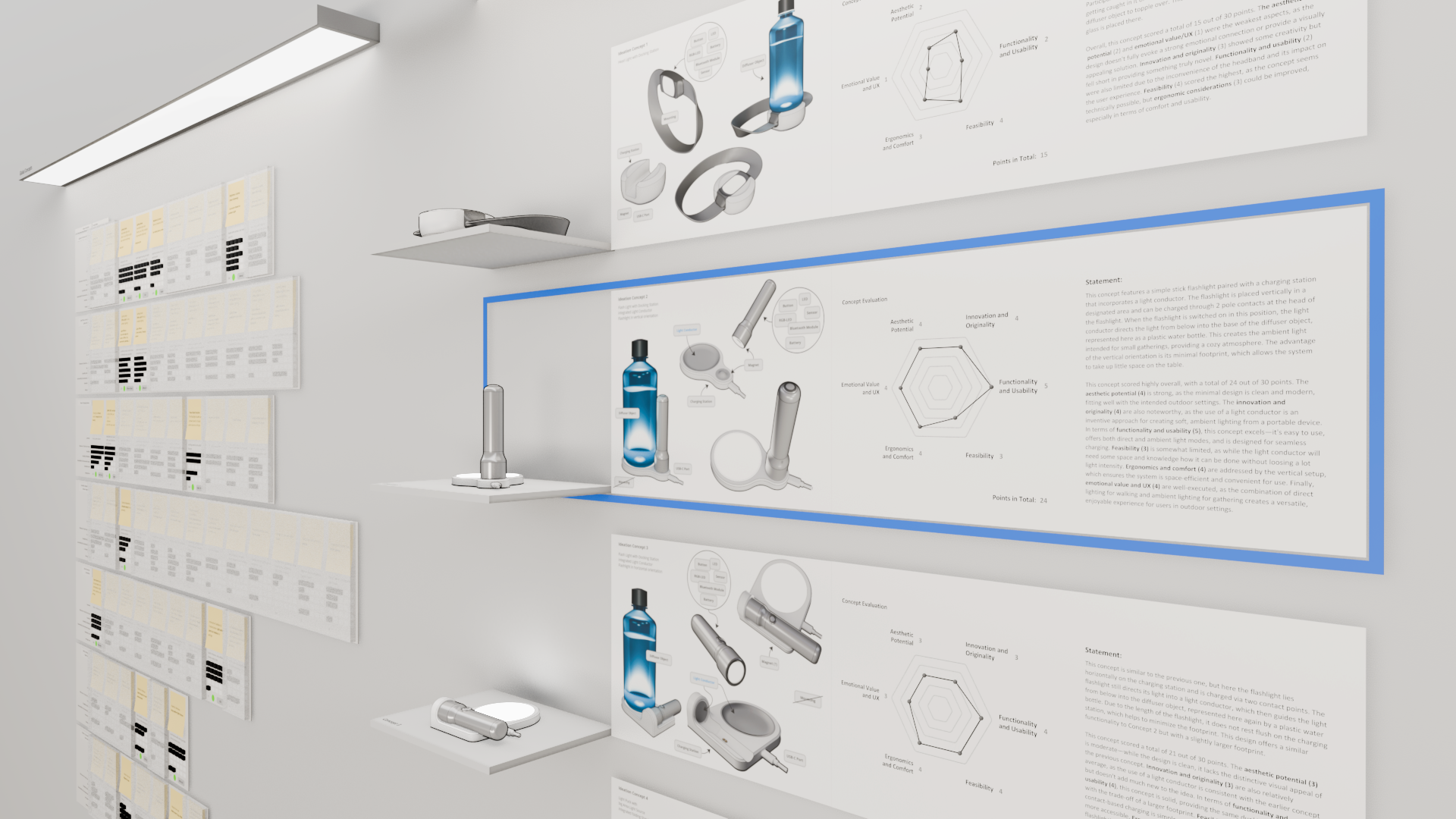
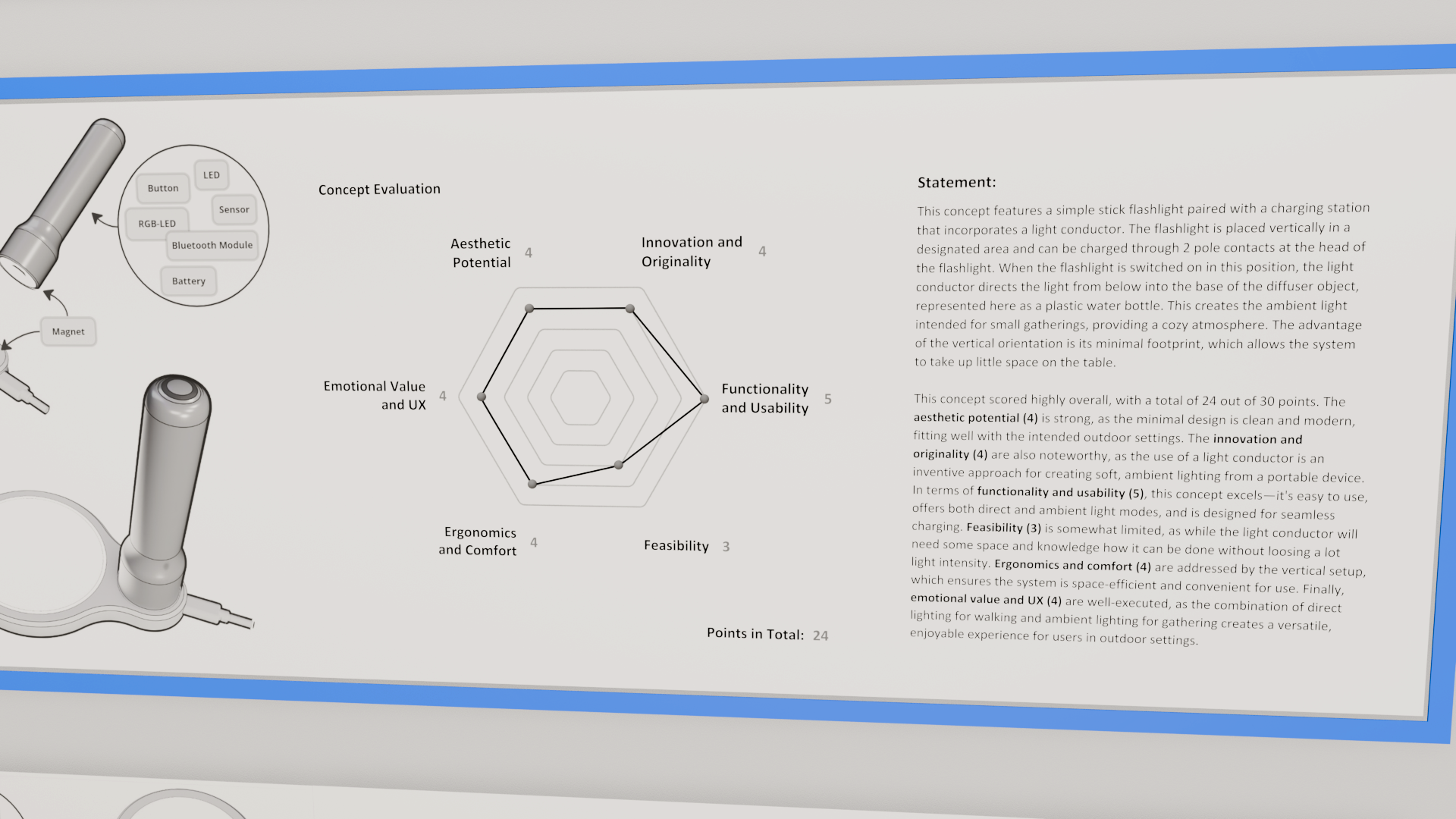
Next, I compare the concepts, usually with feedback from experts and the target audience. The ideas are rated again, this time based on:
- Aesthetic Potential
- Innovation and Originality
- Functionality and Usability
- Feasibility
- Ergonomics and Comfort
- Emotional Value and UX
We then visualize the results on a spider diagram, where each criterion is given a score. In the end, I make a final statement to explain the reasoning behind the decision.
Ideally, at this point, we’ve settled on a concept that feels right, and the project can move into the formal design phase with functional mockups and aesthetic development. If not, we go back to the drawing board and combine different concepts to find a better fit.

 Winter Industrial Design